


Your book has a shelf life. Your author brand doesn’t.
A book launches, peaks, and settles. The Amazon algorithm moves on. The podcast circuit finds new guests. The social media moment passes. If everything you built was attached to that single title, you’re starting over with the next one.
Portability is what you carry forward. It’s the audience that follows you from project to project. The reputation that precedes your next pitch. The clarity that makes every new endeavor feel like a continuation rather than a restart.
Authors who build portability don’t launch books. They compound influence.
Your books are spokes. Your articles, your talks, your interviews—more spokes. They change. They multiply. Some break off and get replaced.
Your purpose is the axle. It doesn’t move.
An author who knows their axle can write about different topics, shift genres, pivot from memoir to business book—and it all coheres. Readers sense the continuity even when the subject matter changes. Opportunities align because the author’s direction is clear.
An author without an axle has a scattered bibliography. Each book is an island. The backlist doesn’t reinforce the new release. Speaking invitations don’t come because no one knows what this author stands for.
The question isn’t “What is my book about?” The question is “What am I about—and how does this book express it?”
Most authors get this backward. They worry about visibility—social media followers, podcast appearances, email subscribers—before they’ve achieved clarity.
Visibility without clarity is noise. You can post every day, appear on dozens of podcasts, build a list of thousands—and still have no portability. Because none of it connects. None of it compounds.
Clarity means you can answer three questions:
What change do you create? Not what your book is about. What happens in a reader’s life because they read it. What shifts. What becomes possible.
Who needs that change most? Not “everyone interested in this topic.” The specific person at the specific moment when your book is exactly what they need. The narrower your answer, the more powerful your message.
Why are you the one to deliver it? Not your credentials. Your standing. What have you lived, learned, or discovered that gives you the right to say what you’re saying? What’s at stake for you?
When you can answer these questions, everything else gets easier. You know what to post. You know which podcasts to pitch. You know what the next book should be. You know which opportunities to decline because they don’t align.
That’s the infrastructure. The visibility comes after—and it sticks because it has somewhere to land.
Treat your author brand as a long-term investment, not a launch tactic.
Book launches are sprints. Author brands are built over years. The authors who break through aren’t the ones who had the best launch week. They’re the ones who showed up consistently, with a consistent message, long enough for that message to take root.
This is compounding. Each interview reinforces the last. Each article builds on the one before. Each book deepens the relationship with readers who’ve been following from the beginning. Nothing is wasted. Nothing starts from zero.
The alternative is what most authors experience: a burst of activity at launch, then silence. Eighteen months later, another burst, another silence. No momentum. No accumulation. Each project lives and dies on its own.
Compounding requires patience. It requires consistency. Most of all, it requires knowing what you’re compounding toward—which brings us back to the axle.
It’s not being loud. It’s not chasing trends. It’s not performing for algorithms.
It’s showing up with intention. Saying the same thing in different ways until the right people start to hear it. Making choices—about topics, platforms, partnerships—that align with your purpose and declining the ones that don’t.
It’s writing the article that no one asked for because it’s what you believe. It’s turning down the podcast that has reach but no relevance. It’s staying in your lane long enough for that lane to become synonymous with your name.
It’s personal development disguised as marketing. Because getting clear on your brand means getting clear on yourself—what you stand for, who you serve, why it matters. That clarity doesn’t just help you sell books. It shapes how you write them.
At Publication Consultants, Author Support means building the infrastructure that makes portability possible.
We start with clarity—your purpose, your audience, your standing. We build the tools that express that clarity consistently: bios, positioning, content frameworks, media materials. And we map the long game: how this book connects to the next one, how your platform grows over time, and how opportunities compound rather than scatter.
This isn’t about making you famous. It’s about making your work durable. Giving your ideas the architecture they need to reach the people who need them—not just at launch, but for years to come.
That’s the power of authors. Not just the book, but everything the author builds around it.
Everything in this piece grows from a single conviction: authors change the world, one reader at a time.
If that resonates—if you sense there’s more to your work than sales numbers and Amazon rankings—we wrote a book about it.
The Power of Authors explores what it really means to write with purpose, build lasting influence, and use your words to make a difference. It’s not a marketing manual. It’s a foundation for authors who believe their work matters and want to treat it that way. Because the best time to think about your author brand isn’t after your book launches, it’s before you write the first word.
The Power of Authors: A Rallying Cry for Today’s Writers to Recognize Their Power, Rise to Their Calling, and Write with Moral Conviction. The book is available on Amazon: http://bit.ly/3K6o8AM. If you’d like an autographed copy, you can order it here: http://bit.ly/4pgmzjM.


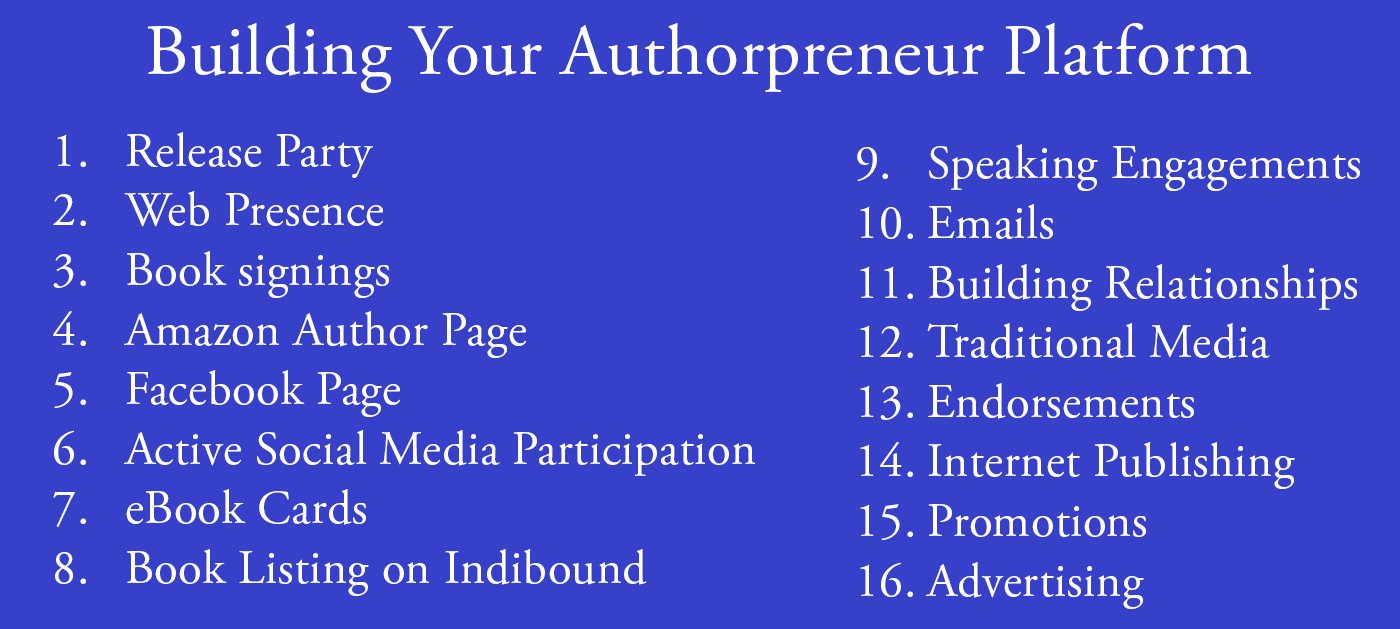

 Author Campaign Method (ACM) for Authorpreneurs
 This is Publication Consultants’ motivation for constantly striving to assist authors sell and market their books. Author Campaign Method (ACM) of sales and marketing is Publication Consultants’ plan to accomplish this so that our authors’ books have a reasonable opportunity for success. We know the difference between motion and direction. ACM is direction! ACM is the process for authorpreneurs who are serious about bringing their books to market. ACM is a boon for them.
 Release Party
 Web Presence
 Book Signings
 Amazon Author Page
 Facebook Profile and Facebook Page
 Active Social Media Participation
 Ebook Cards
 The Great Alaska Book Fair: October 8, 2016


 Costco Book Signings
 eBook Cards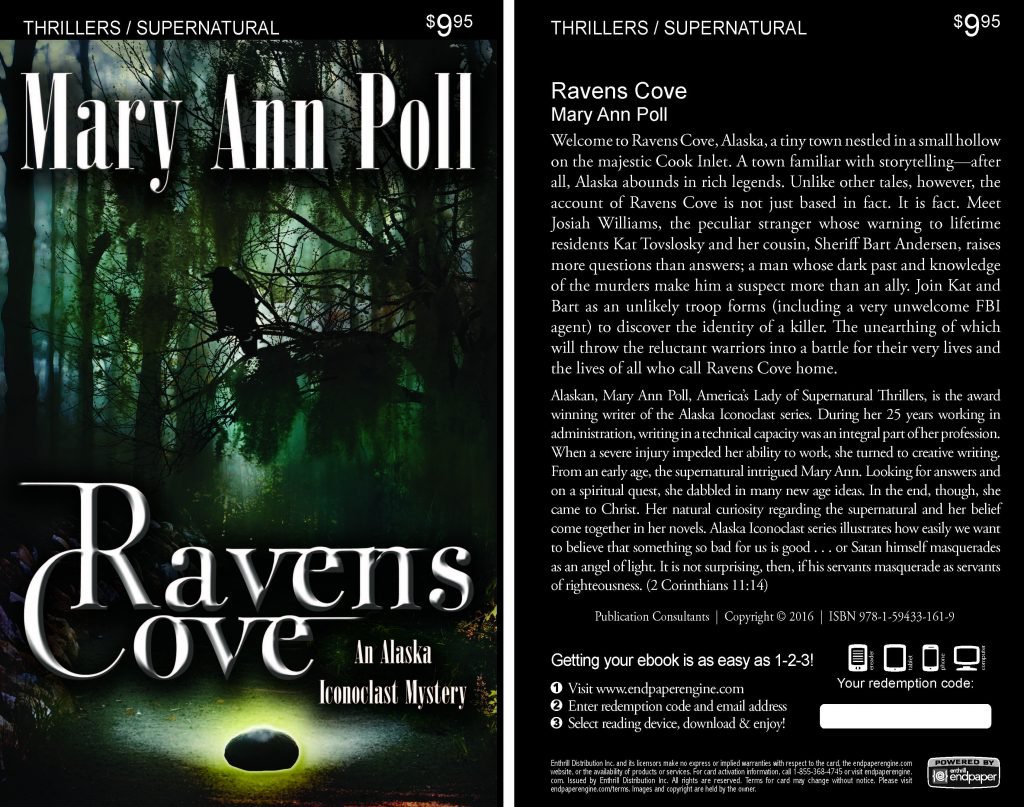

 Benjamin Franklin Award
 Jim Misko Book Signing at Barnes and Noble
 Cortex is for serious authors and will probably not be of interest to hobbyists. We recorded our Cortex training and information meeting. If you’re a serious author, and did not attend the meeting, and would like to review the training information, kindly let us know. Authors are required to have a Facebook author page to use Cortex.
 Correction:
 We take the quote by Marcella Smith, Small Press Business Manager, Barnes & Noble seriously: “The author is essential to the success of the book, giving energy behind the book to make it something that a customer will come in and ask for. That is what makes the difference in a book that sells, that develops legs, and has a life of its own. Otherwise the book goes on the shelf and stays there for three months. Then it gets returned.”
 This is Publication Consultants’ motivation for constantly striving to assist authors sell and market their books. ACM is Publication Consultants’ plan to accomplish this so that our authors’ books have a reasonable opportunity for success. We know the difference between motion and direction. ACM is direction! ACM is the process for authors who are serious about bringing their books to market. ACM is a boon for serious authors, but a burden for hobbyist. We don’t recommend ACM for hobbyists.

 We’re the only publisher we know of that provides authors with book signing opportunities. Book signing are appropriate for hobbyist and essential for serious authors. To schedule a book signing kindly go to our website, <
 An Author Page on Amazon Author Central is a serious author ACM requirement and desirable for the hobbyist. Author Central is a free resource designed to help authors become more active participants in the promotion of their books. In Author Central you can manage an Author Page, update information about your books, and view Customer Reviews and sales information for your bibliography. If you don’t already have an Author Page on
  We hear authors complain about all the personal stuff on Facebook. Most of these complaints are because the author doesn’t understand the difference difference between a Facebook profile and a Facebook page. Simply put, a profile is for personal things for friends and family; a page is for business. If your book is just a hobby, then it’s fine to have only a Facebook profile and make your posts for friends and family; however, if you’re serious about your writing, and it’s a business with you, or you want it to be business, then you need a Facebook page as an author. It’s simple to tell if it’s a page or a profile. A profile shows how many friends and a page shows how many likes. Here’s a link <> to a straight forward description on how to set up your author Facebook page.
 Active Social Media Participation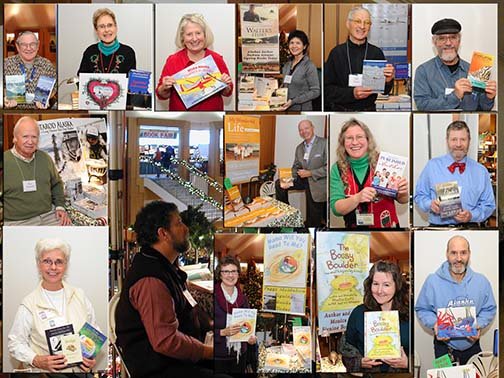


 Mosquito Books has a new location in the Anchorage international airport and is available for signings with 21 days notice. Jim Misko had a signing there yesterday. His signing report included these words, “Had the best day ever at the airport . . ..”


 The Lyin Kings: The Wannabe World Leaders
 Time and Tide


 ReadAlaska 2014
 Readerlink and Book Signings
 2014 Independent Publisher Book Awards Results
 Bonnye Matthews Radio Interview
 Rick Mystrom Radio Interview
 When he published those overseas blogs as the book The Innocents Abroad, it would become a hit. But you couldn’t find it in bookstores.
 More NetGalley
 Mary Ann Poll


 Bumppo
 Computer Spell Checkers
 Seven Things I Learned From a Foreign Email
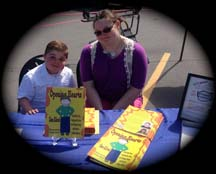 2014 Spirit of Youth Awards
 Book Signings

 Blog Talk Radio
 Publication Consultants Blog
 Book Signings

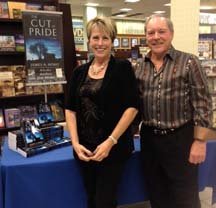

 Don and Lanna Langdok
 Ron Walden
 Book Signings Are Fun
 Release Party Video
 Erin’s book,
  Heather’s book,
  New Books