

 On Monday, March 2, 2026, a Boeing 737 lifted off from Ronald Reagan Washington National Airport. Its cargo was unlike anything that had ever traveled by commercial aircraft.
Nine documents. Founding-era originals. The kind of paper that never leaves the climate-controlled vaults of the National Archives.
An 1823 engraved copy of the Declaration of Independence, commissioned by Secretary of State John Quincy Adams. The 1783 Treaty of Paris, which formally ended the Revolutionary War—signed by Benjamin Franklin, John Adams, and John Jay. The Oaths of Allegiance signed in 1778 by George Washington, Alexander Hamilton, and Aaron Burr. A draft of the U.S. Constitution with handwritten notes by the delegates who debated it.
The plane landed in Kansas City. On Friday, March 6, the documents went on display at the National World War I Museum and Memorial—the first stop on an eight-city tour celebrating America’s 250th anniversary.
“It’s tangible history,” said Jim Byron, senior adviser to the Archivist of the United States. “And tangible history inspires.”
Local schools booked visits for more than 5,000 children before the exhibit opened. Tickets are free. The documents will travel to Atlanta, Los Angeles, Houston, Denver, Miami, Dearborn, and Seattle before returning to the vaults in August.
For most Americans, this will be the only chance they ever have to stand before the words that founded a nation.
Thomas Jefferson understood what these documents meant. He wrote one of them. And he spent the rest of his life thinking about what it meant to preserve the written record of a nation’s founding.
In 1823—the same year John Quincy Adams commissioned the engraving of the Declaration now flying across America—Jefferson wrote to a man named Hugh P. Taylor:
“I agree with you that it is the duty of every good citizen to use all the opportunities, which occur to him, for preserving documents relating to the history of our country.”
Jefferson did not believe the founding documents were museum pieces. He believed they were living things—words that needed to be read, argued about, carried forward. He believed preservation was not passive. It was active. It was a duty.
When asked about the purpose of the Declaration itself, Jefferson said he had not set out “to find out new principles, or new arguments, never before thought of… but to place before mankind the common sense of the subject, in terms so plain and firm as to command their assent.”
Plain and firm. Words anyone could understand. Words that commanded assent not through complexity but through clarity.
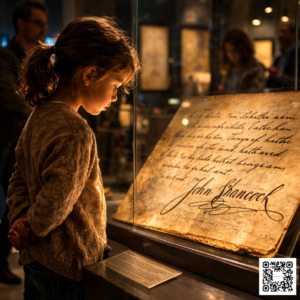
This week, somewhere in Kansas City, a child will stand before George Washington’s handwritten oath of allegiance. The paper is 248 years old. The ink has faded. The signature is unmistakable.
That child will understand something no textbook could teach: that a nation begins with a pen and a page. The revolution was not only fought with muskets. It was written.
The Power of Authors calls writers to this truth. The documents on that plane matter because someone wrote them. The words endure because someone chose them carefully, arranged them deliberately, committed them to paper in terms plain and firm.
What you write may not fly across the country on a Boeing 737. But it may reach someone who needs it. It may outlast you. It may be the tangible history that inspires the next generation to act.
Jefferson called it a duty. The duty remains.
The Power of Authors by Evan and Lois Swensen explores what it means to write with purpose — and why the deepest convictions often live in the smallest spaces on the page.
The book is available on Amazon: http://bit.ly/3K6o8AM. If you’d like an autographed copy, you can order it here: http://bit.ly/4pgmzjM.


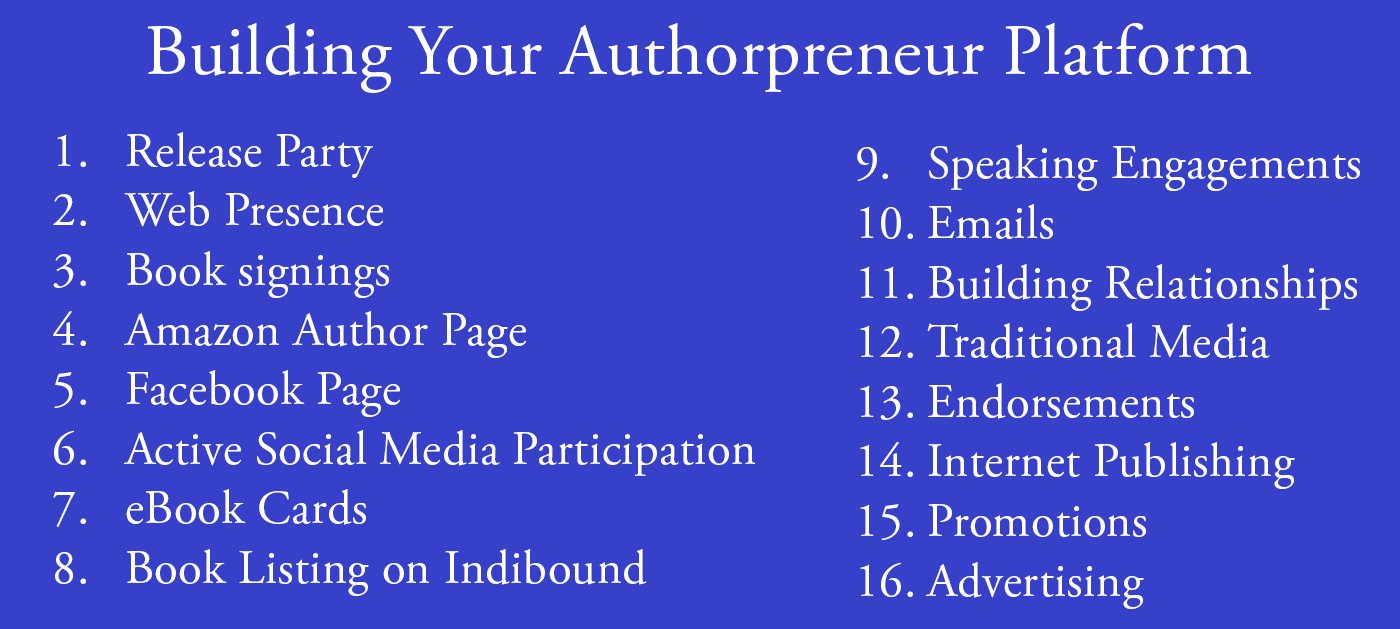

 Author Campaign Method (ACM) for Authorpreneurs
 This is Publication Consultants’ motivation for constantly striving to assist authors sell and market their books. Author Campaign Method (ACM) of sales and marketing is Publication Consultants’ plan to accomplish this so that our authors’ books have a reasonable opportunity for success. We know the difference between motion and direction. ACM is direction! ACM is the process for authorpreneurs who are serious about bringing their books to market. ACM is a boon for them.
 Release Party
 Web Presence
 Book Signings
 Amazon Author Page
 Facebook Profile and Facebook Page
 Active Social Media Participation
 Ebook Cards
 The Great Alaska Book Fair: October 8, 2016


 Costco Book Signings
 eBook Cards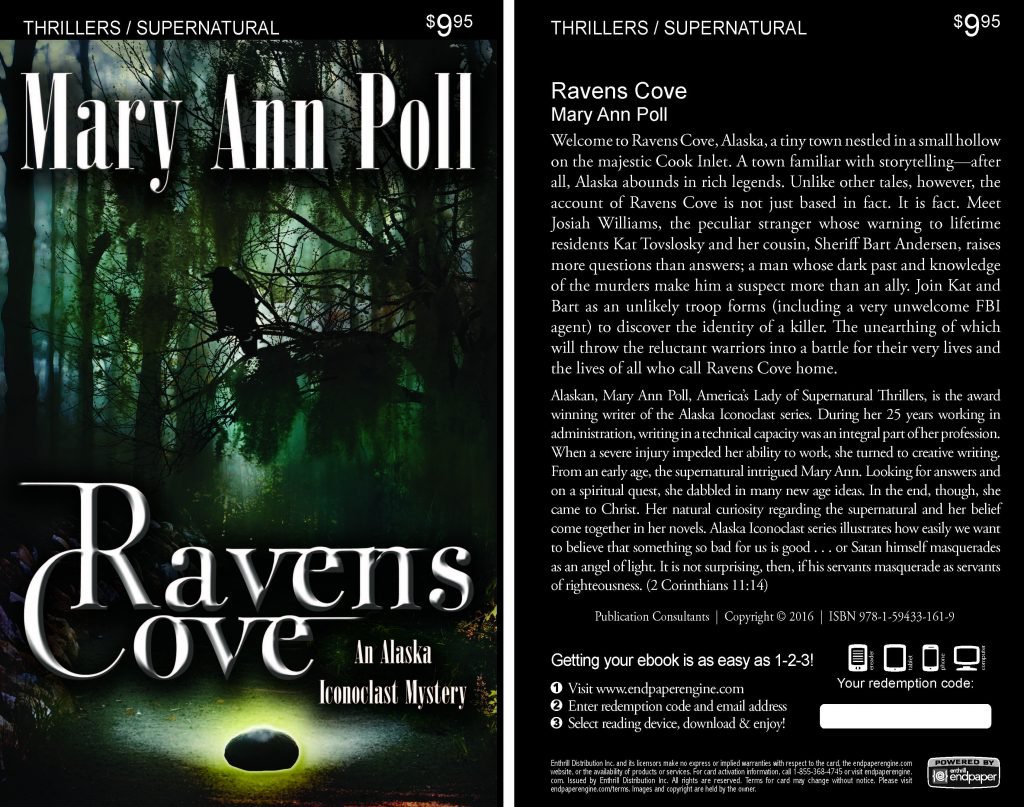

 Benjamin Franklin Award
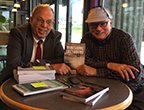
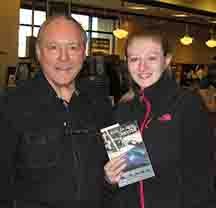 Jim Misko Book Signing at Barnes and Noble
 Cortex is for serious authors and will probably not be of interest to hobbyists. We recorded our Cortex training and information meeting. If you’re a serious author, and did not attend the meeting, and would like to review the training information, kindly let us know. Authors are required to have a Facebook author page to use Cortex.
 Correction:
 We take the quote by Marcella Smith, Small Press Business Manager, Barnes & Noble seriously: “The author is essential to the success of the book, giving energy behind the book to make it something that a customer will come in and ask for. That is what makes the difference in a book that sells, that develops legs, and has a life of its own. Otherwise the book goes on the shelf and stays there for three months. Then it gets returned.”
 This is Publication Consultants’ motivation for constantly striving to assist authors sell and market their books. ACM is Publication Consultants’ plan to accomplish this so that our authors’ books have a reasonable opportunity for success. We know the difference between motion and direction. ACM is direction! ACM is the process for authors who are serious about bringing their books to market. ACM is a boon for serious authors, but a burden for hobbyist. We don’t recommend ACM for hobbyists.

 We’re the only publisher we know of that provides authors with book signing opportunities. Book signing are appropriate for hobbyist and essential for serious authors. To schedule a book signing kindly go to our website, <
 An Author Page on Amazon Author Central is a serious author ACM requirement and desirable for the hobbyist. Author Central is a free resource designed to help authors become more active participants in the promotion of their books. In Author Central you can manage an Author Page, update information about your books, and view Customer Reviews and sales information for your bibliography. If you don’t already have an Author Page on
  We hear authors complain about all the personal stuff on Facebook. Most of these complaints are because the author doesn’t understand the difference difference between a Facebook profile and a Facebook page. Simply put, a profile is for personal things for friends and family; a page is for business. If your book is just a hobby, then it’s fine to have only a Facebook profile and make your posts for friends and family; however, if you’re serious about your writing, and it’s a business with you, or you want it to be business, then you need a Facebook page as an author. It’s simple to tell if it’s a page or a profile. A profile shows how many friends and a page shows how many likes. Here’s a link <> to a straight forward description on how to set up your author Facebook page.
 Active Social Media Participation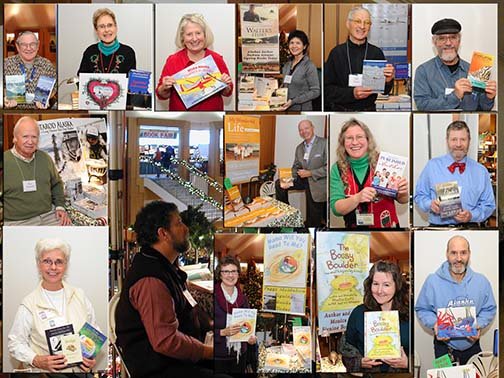


 Mosquito Books has a new location in the Anchorage international airport and is available for signings with 21 days notice. Jim Misko had a signing there yesterday. His signing report included these words, “Had the best day ever at the airport . . ..”


 The Lyin Kings: The Wannabe World Leaders
 Time and Tide


 ReadAlaska 2014
 Readerlink and Book Signings
 2014 Independent Publisher Book Awards Results
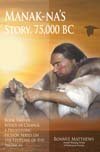
 Bonnye Matthews Radio Interview
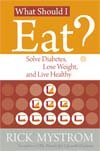 Rick Mystrom Radio Interview
 When he published those overseas blogs as the book The Innocents Abroad, it would become a hit. But you couldn’t find it in bookstores.
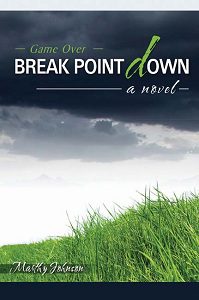 More NetGalley
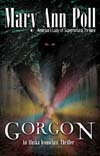 Mary Ann Poll


 Bumppo
 Computer Spell Checkers
 Seven Things I Learned From a Foreign Email
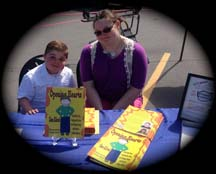 2014 Spirit of Youth Awards
 Book Signings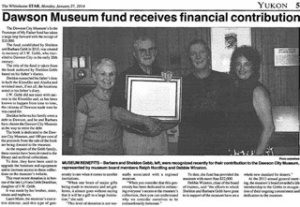

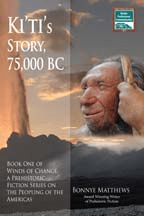
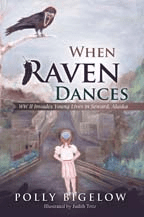 Blog Talk Radio
 Publication Consultants Blog
 Book Signings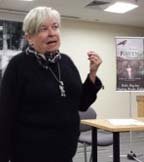
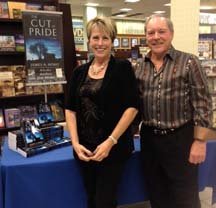

 Don and Lanna Langdok
 Ron Walden
 Book Signings Are Fun
 Release Party Video
 Erin’s book,
  Heather’s book,
  New Books