

 Authors think about audiences. They imagine crowds. They picture bookstores, bestseller lists, speaking engagements. They ask themselves how to reach thousands, tens of thousands, the widest possible number of people.
The question sounds ambitious. It is also the wrong place to start.
The books that reach the most people almost always begin by reaching one.
I’ve published more than five hundred books. The manuscripts that arrive, trying to speak to everyone, speak to no one. The language goes flat. The voice turns generic. The sentences smooth themselves into something inoffensive, careful, and forgettable. You can feel the author trying to please a room full of strangers, and the effort drains the life out of every page.
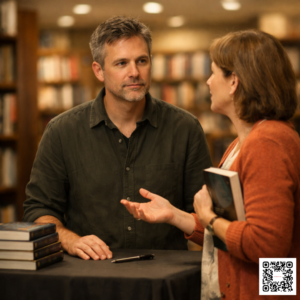
Then a different manuscript arrives. The voice is specific. The sentences carry weight. You can feel the author leaning forward, speaking directly to someone — not a market, not a demographic, not an audience, but a person. A daughter. A fellow veteran. A stranger sitting in a hospital waiting room who needs exactly this story at exactly this moment.
That manuscript changes people. Every time.
Writing for one reader is not a limitation. It is a discipline. It forces the author to answer questions most writers avoid. Who am I talking to? What does this person need to hear? What do they already know? What are they afraid of? What would it mean for them to read this and feel less alone?
These questions sharpen everything. They sharpen the language because you stop decorating and start communicating. They sharpen the structure because you stop arranging and start guiding. They sharpen the purpose because you stop wondering if the book matters and start writing as if someone’s life depends on it.
Sometimes it does.
A memoir written for a grandchild carries a different weight than a memoir written for the marketplace. The facts may be the same. The stories may be the same. But the voice changes. The writer stops performing and starts speaking. The distance between author and reader disappears, and what remains is conversation — honest, direct, and human.
This is what readers recognize. Not polish. Not technique. Presence. The feeling that the author wrote this for them, even if the author never knew their name.
I have watched this happen in every genre. A business book written for a struggling entrepreneur reads differently from one written for a general audience. A novel written with a specific kind of grief in mind reaches readers carrying that grief in ways a broader novel never could. A children’s book written for one child — with one child’s fears and one child’s wonder in mind — reaches every child who shares those feelings.
The paradox is real. The narrower the focus, the wider the reach. Specificity is not exclusion. It is invitation. When a reader encounters a book written with that kind of care, they don’t feel shut out because it wasn’t aimed at them. They feel drawn in because the honesty is unmistakable.
You do not need a million readers. You need the right one. One person whose life intersects with your words at the right moment. One reader who picks up your book, finishes it, and sits quietly for a moment because something shifted inside them.
That reader will hand the book to someone else. They always do. They’ll say the words every author hopes to hear: “You need to read this.”
And the circle widens — not because you aimed wide, but because you aimed true.
If you’re struggling with your manuscript, stop thinking about your audience. Think about your reader. One person. Give them a face, a name, a life. Write the book they need. Say what they need to hear in the way they need to hear it.
The audience will find you. It always finds the writer who dared to write for one.
The Power of Authors by Evan and Lois Swensen explores what it means to write with purpose — and why the writer who speaks to one reader with conviction reaches further than the writer who speaks to everyone with caution.
The book is available on Amazon: http://bit.ly/3K6o8AM. If you’d like an autographed copy, you can order it here: http://bit.ly/4pgmzjM.


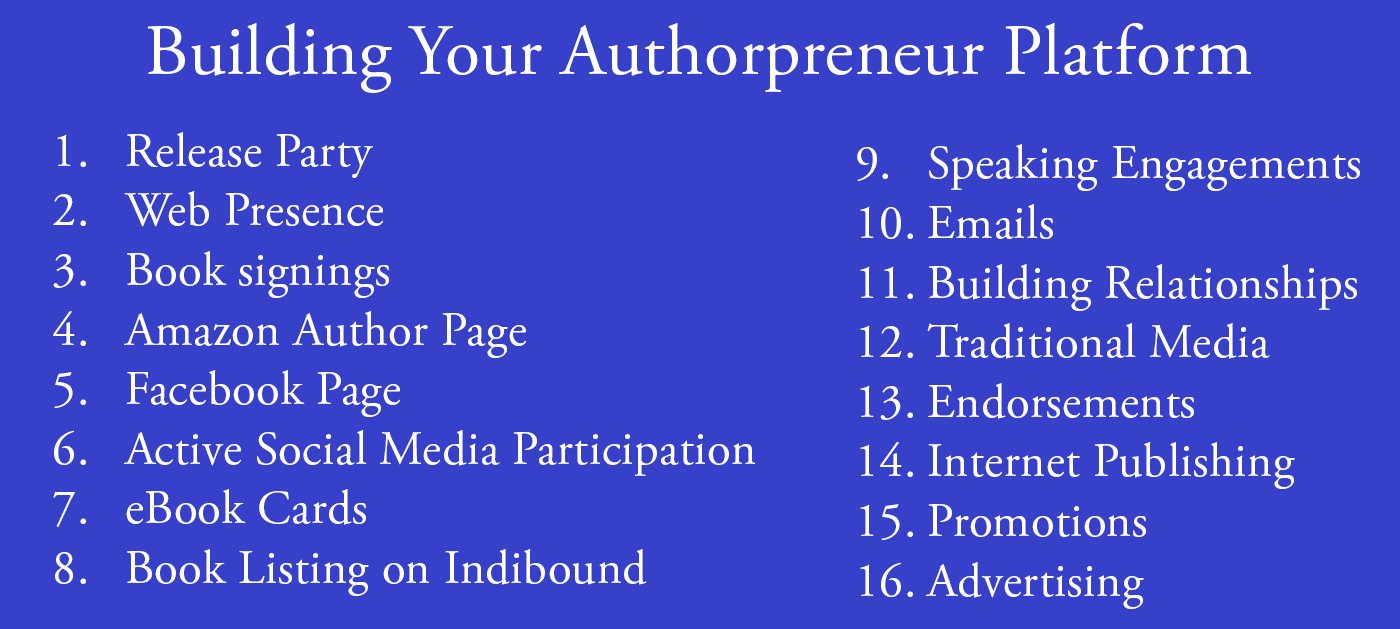

 Author Campaign Method (ACM) for Authorpreneurs
 This is Publication Consultants’ motivation for constantly striving to assist authors sell and market their books. Author Campaign Method (ACM) of sales and marketing is Publication Consultants’ plan to accomplish this so that our authors’ books have a reasonable opportunity for success. We know the difference between motion and direction. ACM is direction! ACM is the process for authorpreneurs who are serious about bringing their books to market. ACM is a boon for them.
 Release Party
 Web Presence
 Book Signings
 Amazon Author Page
 Facebook Profile and Facebook Page
 Active Social Media Participation
 Ebook Cards
 The Great Alaska Book Fair: October 8, 2016


 Costco Book Signings
 eBook Cards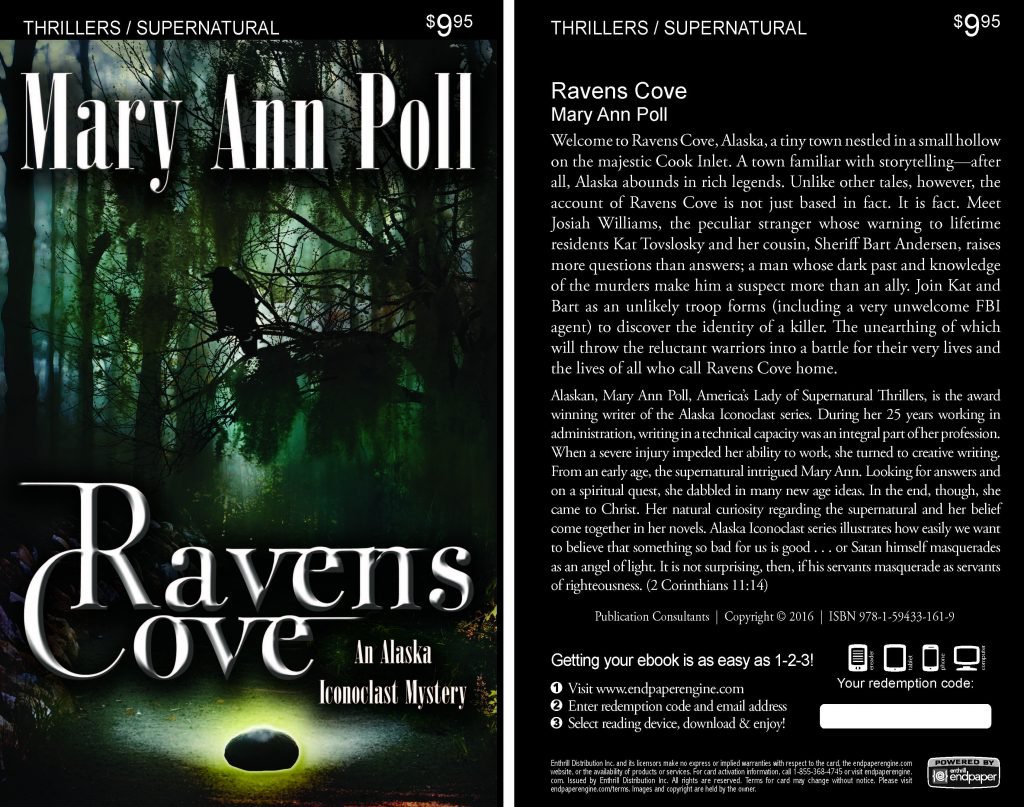

 Benjamin Franklin Award
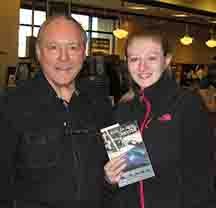 Jim Misko Book Signing at Barnes and Noble
 Cortex is for serious authors and will probably not be of interest to hobbyists. We recorded our Cortex training and information meeting. If you’re a serious author, and did not attend the meeting, and would like to review the training information, kindly let us know. Authors are required to have a Facebook author page to use Cortex.
 Correction:
 We take the quote by Marcella Smith, Small Press Business Manager, Barnes & Noble seriously: “The author is essential to the success of the book, giving energy behind the book to make it something that a customer will come in and ask for. That is what makes the difference in a book that sells, that develops legs, and has a life of its own. Otherwise the book goes on the shelf and stays there for three months. Then it gets returned.”
 This is Publication Consultants’ motivation for constantly striving to assist authors sell and market their books. ACM is Publication Consultants’ plan to accomplish this so that our authors’ books have a reasonable opportunity for success. We know the difference between motion and direction. ACM is direction! ACM is the process for authors who are serious about bringing their books to market. ACM is a boon for serious authors, but a burden for hobbyist. We don’t recommend ACM for hobbyists.

 We’re the only publisher we know of that provides authors with book signing opportunities. Book signing are appropriate for hobbyist and essential for serious authors. To schedule a book signing kindly go to our website, <
 An Author Page on Amazon Author Central is a serious author ACM requirement and desirable for the hobbyist. Author Central is a free resource designed to help authors become more active participants in the promotion of their books. In Author Central you can manage an Author Page, update information about your books, and view Customer Reviews and sales information for your bibliography. If you don’t already have an Author Page on
  We hear authors complain about all the personal stuff on Facebook. Most of these complaints are because the author doesn’t understand the difference difference between a Facebook profile and a Facebook page. Simply put, a profile is for personal things for friends and family; a page is for business. If your book is just a hobby, then it’s fine to have only a Facebook profile and make your posts for friends and family; however, if you’re serious about your writing, and it’s a business with you, or you want it to be business, then you need a Facebook page as an author. It’s simple to tell if it’s a page or a profile. A profile shows how many friends and a page shows how many likes. Here’s a link <> to a straight forward description on how to set up your author Facebook page.
 Active Social Media Participation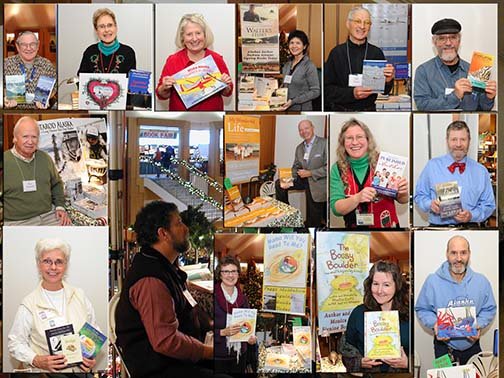


 Mosquito Books has a new location in the Anchorage international airport and is available for signings with 21 days notice. Jim Misko had a signing there yesterday. His signing report included these words, “Had the best day ever at the airport . . ..”


 The Lyin Kings: The Wannabe World Leaders
 Time and Tide


 ReadAlaska 2014
 Readerlink and Book Signings
 2014 Independent Publisher Book Awards Results
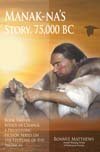
 Bonnye Matthews Radio Interview
 Rick Mystrom Radio Interview
 When he published those overseas blogs as the book The Innocents Abroad, it would become a hit. But you couldn’t find it in bookstores.
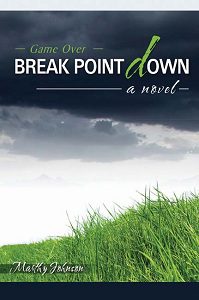 More NetGalley
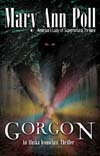 Mary Ann Poll


 Bumppo
 Computer Spell Checkers
 Seven Things I Learned From a Foreign Email
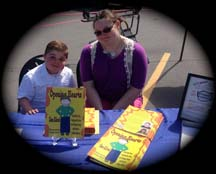 2014 Spirit of Youth Awards
 Book Signings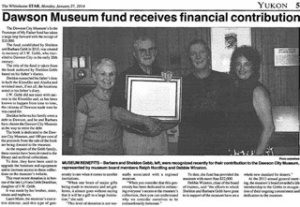

 Blog Talk Radio
 Publication Consultants Blog
 Book Signings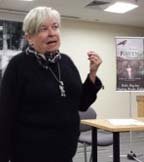

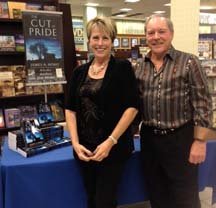

 Don and Lanna Langdok
 Ron Walden
 Book Signings Are Fun
 Release Party Video
 Erin’s book,
  Heather’s book,
  New Books