

Most writers don’t struggle with how to write.
They struggle with whether their words still matter.
 Everywhere an author looks, attention feels fractured, shortened, thinned down to headlines, clips, and scrolls measured in seconds rather than thought.
It’s easy to conclude readers are disappearing.
It’s easy to assume books are losing ground.
It’s easy to wonder whether writing long-form work still has a place.
The truth is quieter, and far more encouraging.
People are reading fewer books casually.
But the people who do read are reading with intent.
This distinction matters.
A generation ago, reading filled idle time.
Now it fills chosen time.
That single shift changes everything for authors.
Today’s reader doesn’t wander into books by accident.
They arrive because something pulled them there.
A question.
A tension.
A lived experience they recognized in someone else.
That’s not a loss.
That’s a refinement.
What has shrunk is the audience willing to read anything.
What remains is the audience willing to read something that matters.
This is why so many authors feel conflicted about marketing.
They don’t want to shout.
They don’t want to chase clicks.
They don’t want to reduce years of thought to a slogan.
They shouldn’t have to.
What authors need is not a louder megaphone.
They need a doorway.
This is where many get it wrong.
They think visibility requires performance.
It doesn’t.
It requires presence.
Readers today want to understand how an author thinks before they decide whether to invest their time.
They want to hear a voice, not a pitch.
They want to feel steadiness, not urgency.
This is why formats like conversations, essays, and thoughtfully led webinars work so well when used correctly.
Not as sales tools.
As invitations.
When an author speaks plainly about the ideas behind a book, something important happens.
Pressure dissolves.
Defensiveness fades.
Trust has room to grow.
A reader listening to an author explain why they wrote a book learns more than what’s on the page.
They learn what the author notices.
What they wrestle with.
What they care enough to name.
That kind of attention cannot be forced.
But it can be earned.
This is also why so many authors feel relief when they realize they don’t have to “market” in the way the word is usually framed.
They don’t have to sell.
They don’t have to persuade.
They don’t have to perform enthusiasm on command.
They simply have to speak honestly about the work.
The modern reading landscape favors depth over volume.
Fewer readers, yes.
But stronger bonds.
That reality changes the goal.
The goal is no longer mass appeal.
The goal is alignment.
When a book finds its reader today, the connection tends to last.
These readers reread.
They recommend quietly.
They give books as gifts.
They stay with authors across multiple works.
That kind of readership doesn’t grow fast.
It grows true.
This is also why authors benefit from spaces that allow them to slow down.
A thoughtful essay.
A guided conversation.
A single hour spent unpacking one idea rather than promoting ten.
These moments don’t feel like marketing because they aren’t.
They are acts of service.
They say to the reader, “Here is how I see the world.
Stay if it helps.
Leave if it doesn’t.”
That posture builds credibility without noise.
It also restores dignity to the act of authorship.
Writing has always been a long game.
What’s changed is not the value of books, but the way readers arrive at them.
Today, readers come through trust.
Through clarity.
Through patience.
For authors willing to meet readers there, this moment is not a decline.
It’s an invitation.
Write the book you believe in.
Speak about it without apology.
Let readers decide in their own time.
The audience may be smaller.
But it is listening.
And when readers choose a book now, they are choosing far more than a purchase.
They are choosing to spend time with a mind.
That has always been the real work of authors.
The Power of Authors by Evan and Lois Swensen explores what it means to write with purpose.
The book is available on Amazon: http://bit.ly/3K6o8AM. If you’d like an autographed copy, you can order it here: http://bit.ly/4pgmzjM.


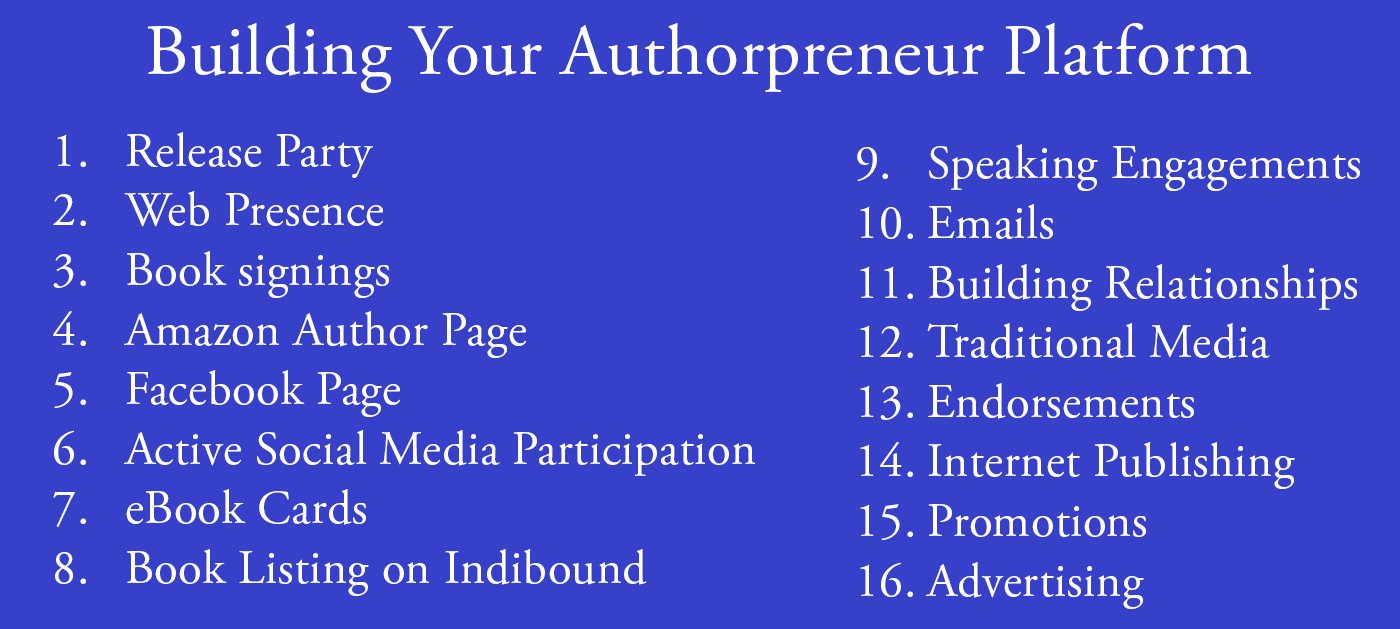

 Author Campaign Method (ACM) for Authorpreneurs
 This is Publication Consultants’ motivation for constantly striving to assist authors sell and market their books. Author Campaign Method (ACM) of sales and marketing is Publication Consultants’ plan to accomplish this so that our authors’ books have a reasonable opportunity for success. We know the difference between motion and direction. ACM is direction! ACM is the process for authorpreneurs who are serious about bringing their books to market. ACM is a boon for them.
 Release Party
 Web Presence
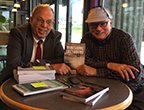 Book Signings
 Amazon Author Page
 Facebook Profile and Facebook Page
 Active Social Media Participation
 Ebook Cards
 The Great Alaska Book Fair: October 8, 2016


 Costco Book Signings
 eBook Cards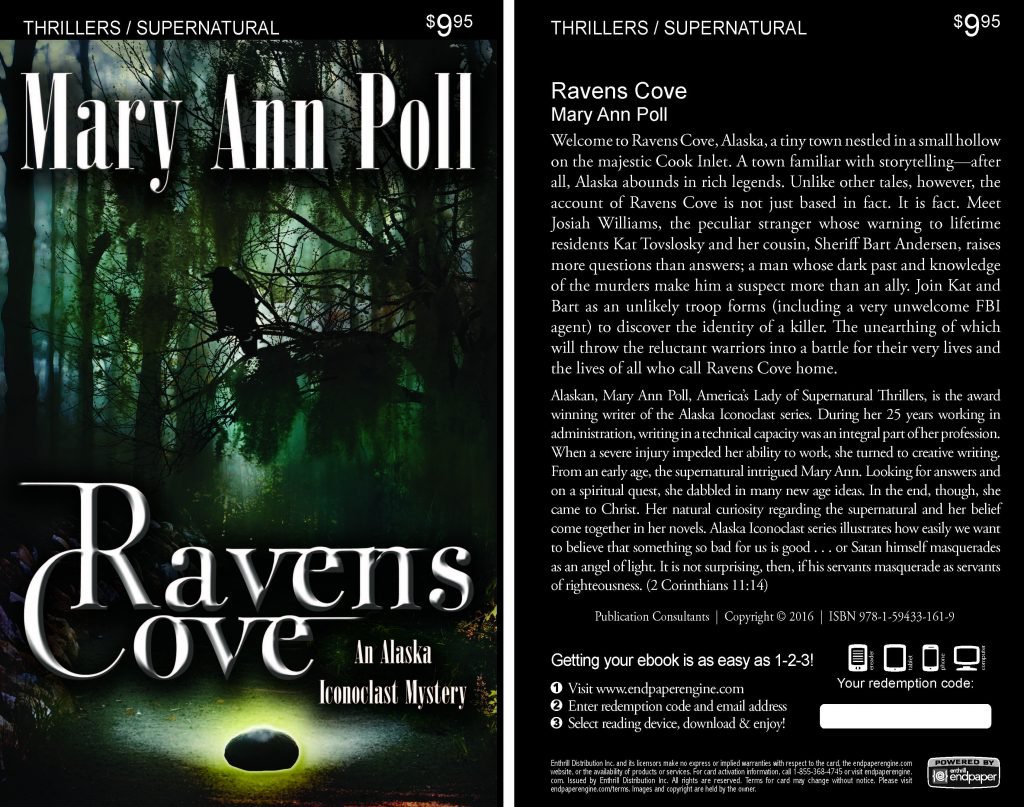

 Benjamin Franklin Award
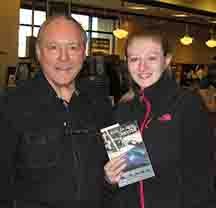 Jim Misko Book Signing at Barnes and Noble
 Cortex is for serious authors and will probably not be of interest to hobbyists. We recorded our Cortex training and information meeting. If you’re a serious author, and did not attend the meeting, and would like to review the training information, kindly let us know. Authors are required to have a Facebook author page to use Cortex.
 Correction:
 We take the quote by Marcella Smith, Small Press Business Manager, Barnes & Noble seriously: “The author is essential to the success of the book, giving energy behind the book to make it something that a customer will come in and ask for. That is what makes the difference in a book that sells, that develops legs, and has a life of its own. Otherwise the book goes on the shelf and stays there for three months. Then it gets returned.”
 This is Publication Consultants’ motivation for constantly striving to assist authors sell and market their books. ACM is Publication Consultants’ plan to accomplish this so that our authors’ books have a reasonable opportunity for success. We know the difference between motion and direction. ACM is direction! ACM is the process for authors who are serious about bringing their books to market. ACM is a boon for serious authors, but a burden for hobbyist. We don’t recommend ACM for hobbyists.

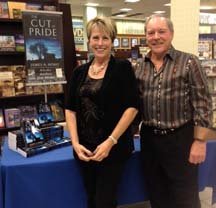
 We’re the only publisher we know of that provides authors with book signing opportunities. Book signing are appropriate for hobbyist and essential for serious authors. To schedule a book signing kindly go to our website, <
 An Author Page on Amazon Author Central is a serious author ACM requirement and desirable for the hobbyist. Author Central is a free resource designed to help authors become more active participants in the promotion of their books. In Author Central you can manage an Author Page, update information about your books, and view Customer Reviews and sales information for your bibliography. If you don’t already have an Author Page on
  We hear authors complain about all the personal stuff on Facebook. Most of these complaints are because the author doesn’t understand the difference difference between a Facebook profile and a Facebook page. Simply put, a profile is for personal things for friends and family; a page is for business. If your book is just a hobby, then it’s fine to have only a Facebook profile and make your posts for friends and family; however, if you’re serious about your writing, and it’s a business with you, or you want it to be business, then you need a Facebook page as an author. It’s simple to tell if it’s a page or a profile. A profile shows how many friends and a page shows how many likes. Here’s a link <> to a straight forward description on how to set up your author Facebook page.
 Active Social Media Participation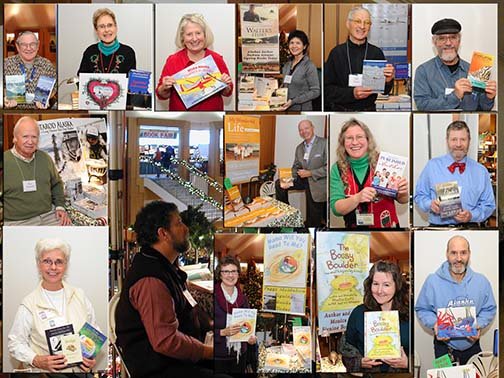


 Mosquito Books has a new location in the Anchorage international airport and is available for signings with 21 days notice. Jim Misko had a signing there yesterday. His signing report included these words, “Had the best day ever at the airport . . ..”


 The Lyin Kings: The Wannabe World Leaders
 Time and Tide


 ReadAlaska 2014
 Readerlink and Book Signings
 2014 Independent Publisher Book Awards Results
 Bonnye Matthews Radio Interview
 Rick Mystrom Radio Interview
 When he published those overseas blogs as the book The Innocents Abroad, it would become a hit. But you couldn’t find it in bookstores.
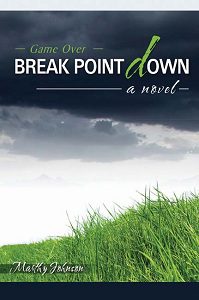 More NetGalley
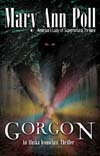 Mary Ann Poll


 Bumppo
 Computer Spell Checkers
 Seven Things I Learned From a Foreign Email
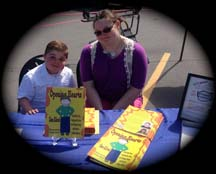 2014 Spirit of Youth Awards
 Book Signings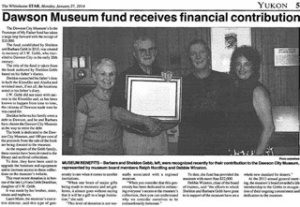

 Blog Talk Radio
 Publication Consultants Blog
 Book Signings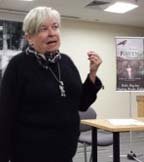


 Don and Lanna Langdok
 Ron Walden
 Book Signings Are Fun
 Release Party Video
 Erin’s book,
  Heather’s book,
  New Books