


Jack London arrived in the Klondike in the summer of 1897. He was twenty-one years old. The gold rush was drawing tens of thousands of men north, and London went with them. He spent the winter at the junction of the Stewart and Yukon rivers. He did not find gold. By spring he had lost teeth to scurvy. He floated more than a thousand miles downstream to get medical attention and worked his way back to California.
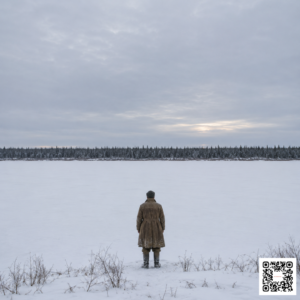 He came home with something worth more than gold.
In his notebooks and in his memory were the sled dogs, the men pushing north through cold killing enough to drop a wet man in minutes, the silence of the interior, the frozen rivers, and the relationships formed and broken under pressure. He had not observed these from a distance. He had lived inside them, sick and broke and without the thing he came for.
The Call of the Wild was published in 1903. White Fang followed in 1906. “To Build a Fire,” his story of a man who underestimates the cold and dies alone in the snow, appeared in its best-known form in 1908 and has stayed in print ever since. London set himself a target: a thousand words a day. He produced dozens of books in his lifetime.
He died in 1916 at the age of forty.
The experience of one winter in the Klondike — a winter he spent sick, broke, and without gold — became literature read around the world for more than a century.
What London understood: experience does not belong to the person who had it. It belongs to the reader who could not be there.
He was not writing memoir. He was writing fiction shaped by what he had seen and felt and survived. Without that winter in the Klondike, London would not have known the North as he did. He had felt the cold, watched the dogs, listened to the men, and learned what happened when human confidence met a country indifferent to it. Years later, those experiences helped him create stories readers could enter without ever setting foot on a frozen river.
You may be sitting on experience the reader cannot reach any other way. The years in a place before it changed. The work nobody understands from the inside but you. The relationship broken in a way you haven’t yet found words for.
London did not wait until he had made sense of the Klondike. He went home and wrote what he had while he had it. He knew the material would not keep forever. He was forty when he died, with more than fifty books behind him.
What experience are you sitting on? What have you lived the reader cannot get anywhere else? And how much longer do you plan to wait?
Discover why purpose is the foundation of every sentence worth writing in The Power of Authors by Evan and Lois Swensen.
The Power of Authors is available from Amazon or your favorite bookseller: https://www.amazon.com/dp/1594338698. If you’d like an autographed copy, you can order it here: http://bit.ly/4pgmzjM.



 Harriet Beecher Stowe wrote Uncle Tom’s Cabin in installments for an abolitionist newspaper beginning in 1851. It appeared as a book in 1852 and sold more than 300,000 copies in its first year. Stowe had lost her young son Samuel Charles to cholera in 1849. When she wrote about the grief of mothers separated from their children, she drew upon that loss.
 When Lois and I ran Alaska Outdoors Radio Magazine, we looked for voices with something worth hearing. We featured people with firsthand experience in the issues shaping Alaska life — subsistence rights, land use, village economies. What made those segments work was not controversy but clarity. A person who had been there, speaking plainly about what they knew.
 Samantha Ellis grew up hearing fragments of Judeo-Iraqi Arabic — phrases her mother and grandmother had carried out of Baghdad, words for warding off the evil eye, for greeting a guest, for the particular way of saying goodbye. Now Ellis worries her son may not carry them at all. The language is nearly extinct. She may be among the last in her family who knows even the pieces she knows.
 A few years ago, I met an author at a conference in Anchorage. She had a fine book — a memoir about commercial fishing on Kodiak Island. The writing was strong. The cover was right. The book was selling.
 Every conference panel, every marketing article, every social media expert adds another item to the author’s list of things they should be doing. The list grows. The author’s time does not.
 She follows the music.
 Bill Cox never shouts. He does not chase trends or controversy. His voice — steady, thoughtful, and honest — cuts through noise with clarity and conviction. My Pursuit of the Axis of Evil is about people — a lifetime of encounters across Siberia, Southeast Asia, India, and Alaska. He writes from the road, the sky, and the heart.
 Last Thursday, the Swedish Academy announced the Nobel Prize in Literature for 2026.
 When Josh Verhagen created Eddie the Ermine, he understood something most authors miss. The illustrations in his book do not decorate the story. They teach. Every page invites interaction. Hidden animals draw young readers deeper into the images. The visual experience is inseparable from the message.
 Three years after his wife’s death, Wolo receives a letter.
 You will hear this advice: create a Facebook Page for your book.
 She was a conservatory student — the kind of student who doesn’t just play but feels music as something larger than technique. Then a relationship ended badly. A choice was made young. She became Livia Cable instead, living quietly in farm country, having traded the conservatory for stability and the passion for something more manageable.
 For every post asking readers to buy the book, share three giving them a reason to stay.
 When I first met Weston Fields, he looked every bit the Kodiak fisherman — rubber boots, suspenders, wool shirt. He was there to support his mother, who had written a book about ranching history on the island. She spoke first. He said almost nothing. When he finally did, it was to tell me — gently — he had already edited her manuscript.
 It is the summer of 1951. London is still pockmarked with bomb sites. Food is still rationed. Men who survived the Burma Railway, the North Atlantic convoys, the firebombing of cities have come home to a country worn to nothing by six years of war and five more of austerity. The war ended in 1945. The damage did not.
 Robin Barefield lives in the wilderness on Kodiak Island, where she and her husband own a remote lodge. She wrote her first novel, Murder Over Kodiak, powered by a generator, miles from the nearest road. No MFA. No publishing connections. No high-speed internet.
 A reader once walked into a bookstore and said, “I’m looking for a mystery set in Alaska.” The bookseller reached for a shelf and handed her a book.
 The ceremony is the same every year. The names are the same. The readers change — grown children now where small children once stood, grandchildren where children once stood. The memorial pools fill the footprints of the towers. The water falls continuously.
 Open a browser you do not normally use. Type your name. Hit search.
 He had grown up in Bujumbura, the capital — the son of a French father and a Rwandan Tutsi mother. In 1994, the genocide in neighboring Rwanda killed between 500,000 and 800,000 people in one hundred days. Civil war followed in Burundi. His family left. He grew up in France.
 The morning after. The folding tables are back in the garage. The leftover food is in the refrigerator. The unsold books are stacked on the dining room table. The banner is rolled up in the corner.
 Lee came to the United States from Seoul at age three, with his mother and sister, to join his father, a psychiatrist who had immigrated earlier. He grew up in Westchester County, outside New York City. As a child, he often translated for his Korean-speaking mother. He stood between two languages for her, carrying her words into English and the world’s words back to her.
 Monday morning. A bookstore manager sits down with forty-seven unread messages. She has an hour before the store opens. She is deciding which emails deserve her attention and which ones can wait.
 The novelist Ella Camposanto has arrived in Sicily with her twelve-year-old daughter, Manuela. They are staying near the ruins where the narrator’s grandmother once worked on an archaeological dig. The summer is full of volcanic rumbles and sudden storms. The narrator’s mother is beginning to forget.
 When I was publishing Alaska Outdoors magazine, the head of the journalism department at the University of Alaska sent me a submission. It was so poorly written, I took it for a joke. I answered it as a joke, only to learn the author was serious. He simply had such an inflated self-image; his writing read like a spoof. It was no spoof.
 At 8:15 on the morning of August 6, 1945, Kiyoshi Tanimoto was on the outskirts of Hiroshima, unloading a handcart at a house in the suburb of Koi. He was two miles from the city center. He had slept poorly — the overnight air-raid warnings had kept him up — and he had risen early and set out with the cart.
 Two books publish on the same Tuesday.
 Among the nineteen longlisted novelists this year are writers who have been writing for a long time before this first novel existed.
 You check your Amazon page for the first time after your launch team has done its work. The reviews are there. Three in the first week. Your heart lifts. Then you notice the label beneath one of them.
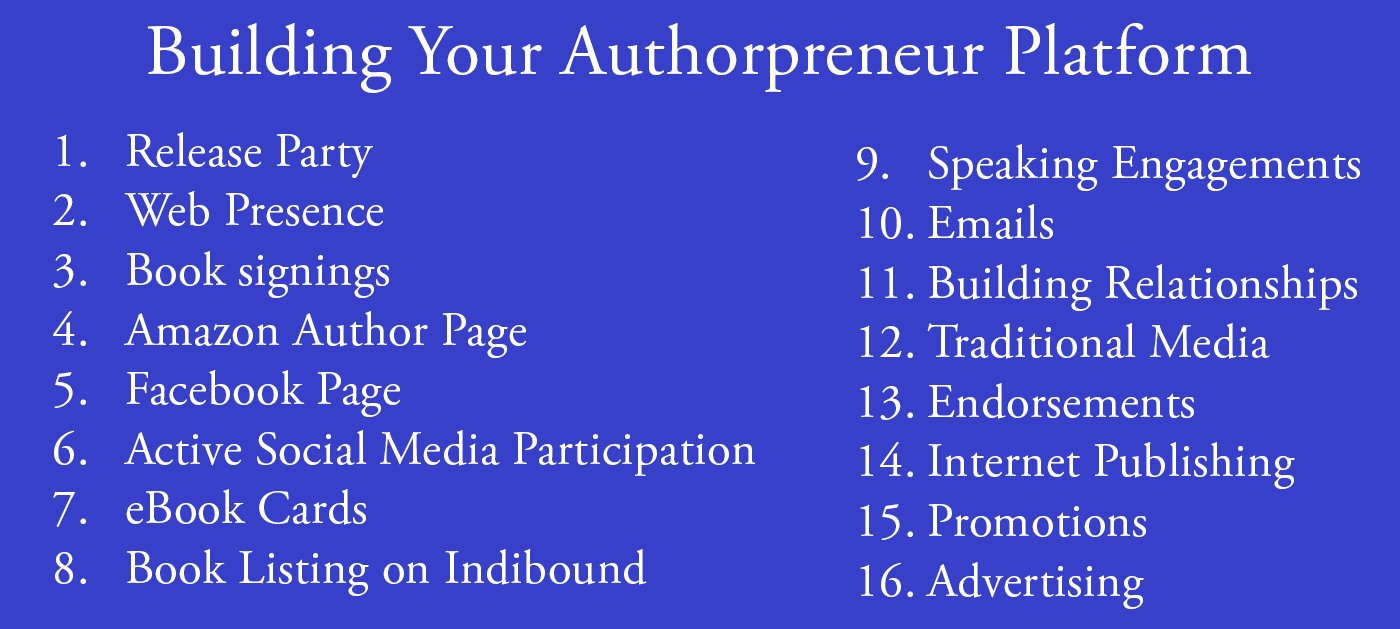
 Author Campaign Method (ACM) for Authorpreneurs
 This is Publication Consultants’ motivation for constantly striving to assist authors sell and market their books. Author Campaign Method (ACM) of sales and marketing is Publication Consultants’ plan to accomplish this so that our authors’ books have a reasonable opportunity for success. We know the difference between motion and direction. ACM is direction! ACM is the process for authorpreneurs who are serious about bringing their books to market. ACM is a boon for them.
 Release Party
 Web Presence
 Book Signings
 Amazon Author Page
 Facebook Profile and Facebook Page
 Active Social Media Participation
 Ebook Cards
 The Great Alaska Book Fair: October 8, 2016



 Costco Book Signings
 eBook Cards

 Benjamin Franklin Award
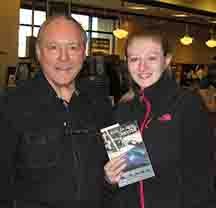 Jim Misko Book Signing at Barnes and Noble

 Cortex is for serious authors and will probably not be of interest to hobbyists. We recorded our Cortex training and information meeting. If you’re a serious author, and did not attend the meeting, and would like to review the training information, kindly let us know. Authors are required to have a Facebook author page to use Cortex.
 Correction:
 We take the quote by Marcella Smith, Small Press Business Manager, Barnes & Noble seriously: “The author is essential to the success of the book, giving energy behind the book to make it something that a customer will come in and ask for. That is what makes the difference in a book that sells, that develops legs, and has a life of its own. Otherwise the book goes on the shelf and stays there for three months. Then it gets returned.”
 This is Publication Consultants’ motivation for constantly striving to assist authors sell and market their books. ACM is Publication Consultants’ plan to accomplish this so that our authors’ books have a reasonable opportunity for success. We know the difference between motion and direction. ACM is direction! ACM is the process for authors who are serious about bringing their books to market. ACM is a boon for serious authors, but a burden for hobbyist. We don’t recommend ACM for hobbyists.


 We’re the only publisher we know of that provides authors with book signing opportunities. Book signing are appropriate for hobbyist and essential for serious authors. To schedule a book signing kindly go to our website, <
 An Author Page on Amazon Author Central is a serious author ACM requirement and desirable for the hobbyist. Author Central is a free resource designed to help authors become more active participants in the promotion of their books. In Author Central you can manage an Author Page, update information about your books, and view Customer Reviews and sales information for your bibliography. If you don’t already have an Author Page on
 We hear authors complain about all the personal stuff on Facebook. Most of these complaints are because the author doesn’t understand the difference difference between a Facebook profile and a Facebook page. Simply put, a profile is for personal things for friends and family; a page is for business. If your book is just a hobby, then it’s fine to have only a Facebook profile and make your posts for friends and family; however, if you’re serious about your writing, and it’s a business with you, or you want it to be business, then you need a Facebook page as an author. It’s simple to tell if it’s a page or a profile. A profile shows how many friends and a page shows how many likes. Here’s a link <> to a straight forward description on how to set up your author Facebook page.
 Active Social Media Participation
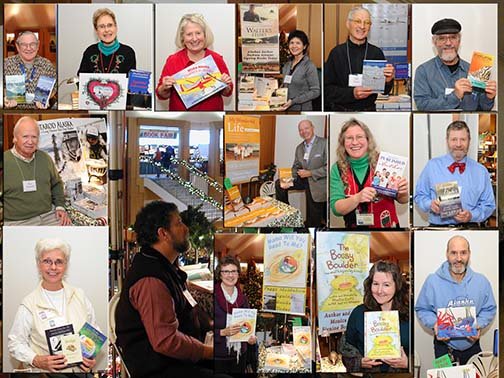


 Mosquito Books has a new location in the Anchorage international airport and is available for signings with 21 days notice. Jim Misko had a signing there yesterday. His signing report included these words, “Had the best day ever at the airport . . ..”


 The Lyin Kings: The Wannabe World Leaders

 Time and Tide


 ReadAlaska 2014
 Readerlink and Book Signings

 2014 Independent Publisher Book Awards Results

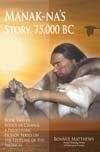
 Bonnye Matthews Radio Interview

 Rick Mystrom Radio Interview
 When he published those overseas blogs as the book The Innocents Abroad, it would become a hit. But you couldn’t find it in bookstores.
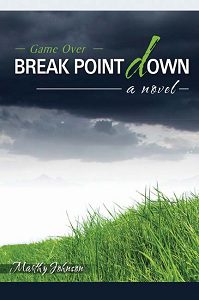 More NetGalley
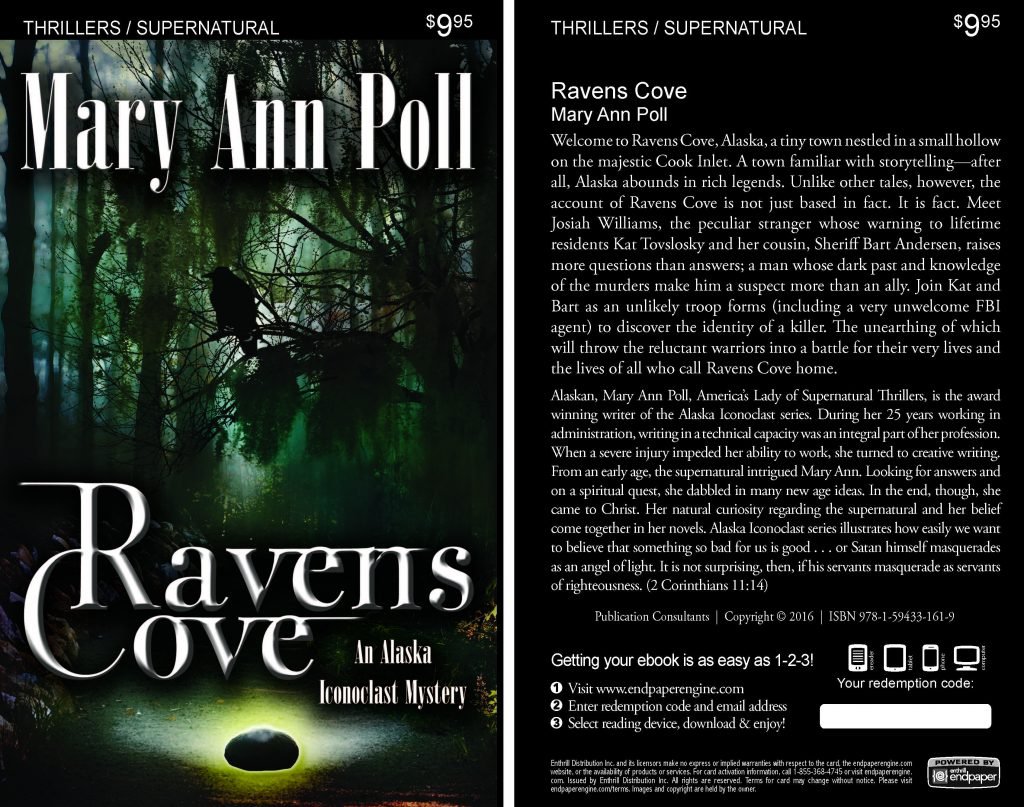
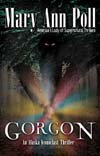 Mary Ann Poll


 Bumppo

 Computer Spell Checkers
 Seven Things I Learned From a Foreign Email
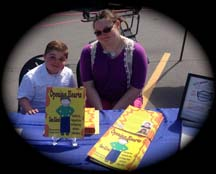 2014 Spirit of Youth Awards
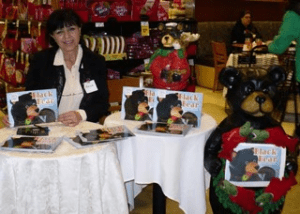
 Book Signings
 Blog Talk Radio
 Publication Consultants Blog
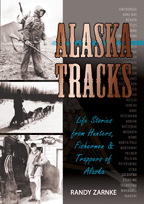 Book Signings
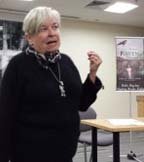

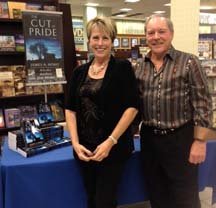

 Don and Lanna Langdok
 Ron Walden
 Book Signings Are Fun
 Release Party Video

 Erin’s book,
 Heather’s book,
 New Books