


Cedar Valley News — February 28, 2026
What Did You Let Go Of Without Noticing?
By: Aisha Khalid
From the fictional town of Cedar Valley, where characters from Quiet Echo continue to respond to real-world events.
 I am a doctor. I listen for a living.
Not just to the words. To the pauses. The thing the patient almost says and then swallows. The question hiding behind the question they actually asked. Twenty years of medicine taught me the diagnosis is almost never in the first sentence. It is in what the person did not realize they were telling you.
I have been reading this paper all week, and something has been sitting on my chest I could not name until this morning. Now I can.
George wrote Tuesday about opinion pages dying. Not because readers stopped caring. Because writers stopped asking why they were writing. The purpose left, and nobody noticed until the subscriptions canceled and the pages went dark.
Lars wrote Wednesday about a country no longer reading. Forty percent did not open a single book last year. The thinking did not disappear all at once. It leaked out slowly, replaced by whatever voice arrived fastest on the nearest screen.
Chloe wrote Thursday about a seven-year-old who cannot read her grandmother’s birthday card. Cursive — the way human hands have connected across generations for centuries — was dropped from the curriculum, and a whole generation lost access to the handwriting of the people who loved them first.
Dan wrote Friday about the dinner table. Thirty percent of families eat together regularly. The rest are in the same house, in different rooms, facing different screens, sharing an address but not a life.
Four stories. Four losses. And here is the thing I could not name until this morning.
Nobody decided.
Nobody woke up and said, “I am done reading.” Nobody announced at breakfast, “We will no longer eat together as a family.” No parent told a child, “You do not need to read your grandmother’s handwriting.” No editor published a memo saying, “We will now write without purpose.”
It drifted. All of it. The way a river cuts a new channel — not in a flood, but inch by inch, season by season, until one morning you look up and the water is not where it used to be.
I see drift every day in my practice. A patient comes in and says he has not been sleeping well. We talk. He has not been sleeping well for two years. He adjusted. He drinks more coffee. He pushes through the afternoon. He stopped noticing he was tired because tired became normal. By the time he sits in my office, the problem is not insomnia. The problem is he forgot what rested feels like.
The drift works the same way in a family. In a town. In a country. You do not lose the important things in a crisis. You lose them in the ordinary — one skipped dinner, one unread book, one letter you meant to write and never did. Each one so small it does not register. And then one morning your daughter hands you a birthday card and says, “What does it say?” and you realize the river moved while you were standing on the bank.
George said ask three questions before you write. Lars said pick up a book. Chloe said write your child’s name in cursive. Dan said set the table. Each of them offered something small. A single act. A few minutes. Nothing expensive, nothing complicated, nothing requiring permission from anyone.
But I wonder whether the acts matter less than the noticing. A person who writes a child’s name in cursive but never thinks about why — is she doing anything more than going through a motion? A family who sits at the table but stares at phones — have they really gathered?
In medicine we call it the presenting complaint. The patient tells you what brought them in. Your job is to find what brought it on. The presenting complaint this week was four separate stories — opinion pages, books, cursive, dinner. The underlying condition is the same in all four.
We stopped paying attention to what mattered while it was still in the room.
My patients sometimes ask me what they should do. I tell them the prescription is not the hard part. The hard part is noticing you need one. Once you see the drift, you cannot unsee it. And once you cannot unsee it, the next step is usually obvious. You already know what to do. You just need to stop long enough to admit it.
Here is my quiet question for the weekend.
If you could get back one thing you let go of without noticing — one habit, one practice, one connection, one conversation you used to have — what would it be?
Do not answer too quickly. The quick answers are almost always borrowed. Sit with it the way you would sit with a symptom you have been ignoring. Let it find you.
And when it does, do not let it drift again.
This editorial is part of the fictional Cedar Valley News series. While the people and town are fictional, the national events they reflect on are real.
Want to know the full story behind Cedar Valley? Teresa, Caleb, Dan, and the community you’ve come to know in these editorials first came together in Quiet Echo. Discover how a small town found its way from fear to fellowship—one quiet act of courage at a time. Available on Amazon: https://bit.ly/3ME4nSs


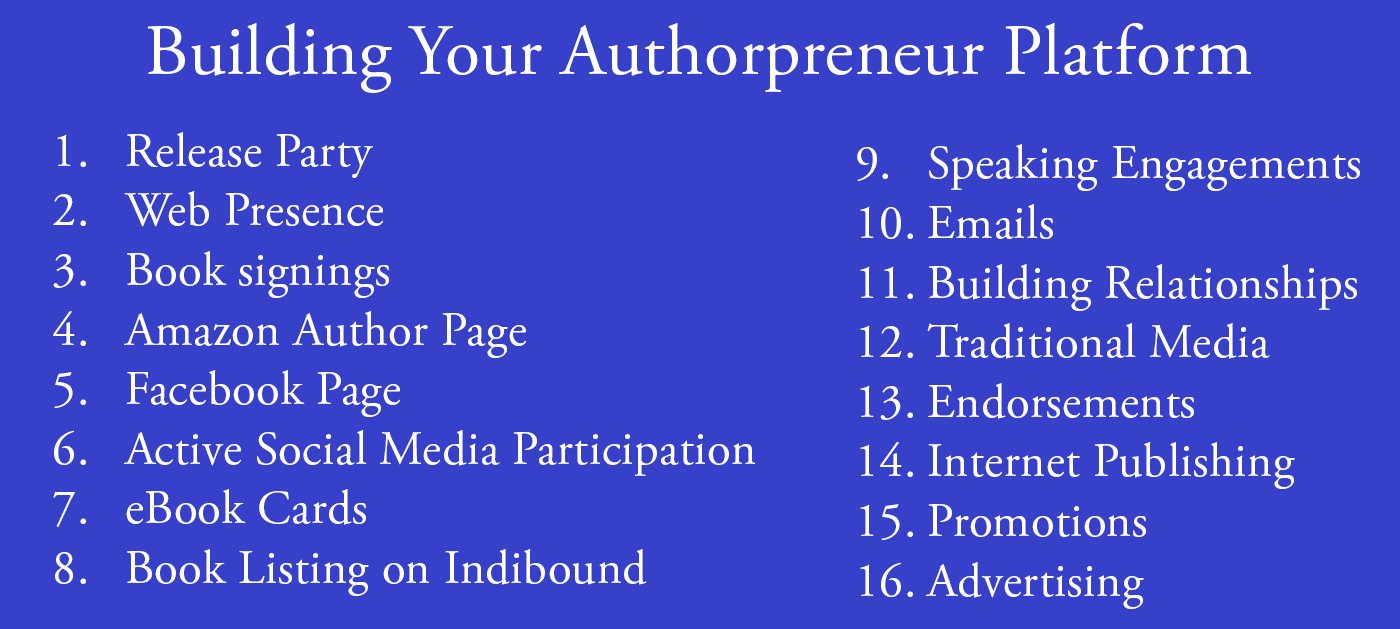

 Author Campaign Method (ACM) for Authorpreneurs
 This is Publication Consultants’ motivation for constantly striving to assist authors sell and market their books. Author Campaign Method (ACM) of sales and marketing is Publication Consultants’ plan to accomplish this so that our authors’ books have a reasonable opportunity for success. We know the difference between motion and direction. ACM is direction! ACM is the process for authorpreneurs who are serious about bringing their books to market. ACM is a boon for them.
 Release Party
 Web Presence
 Book Signings
 Amazon Author Page
 Facebook Profile and Facebook Page
 Active Social Media Participation
 Ebook Cards
 The Great Alaska Book Fair: October 8, 2016


 Costco Book Signings
 eBook Cards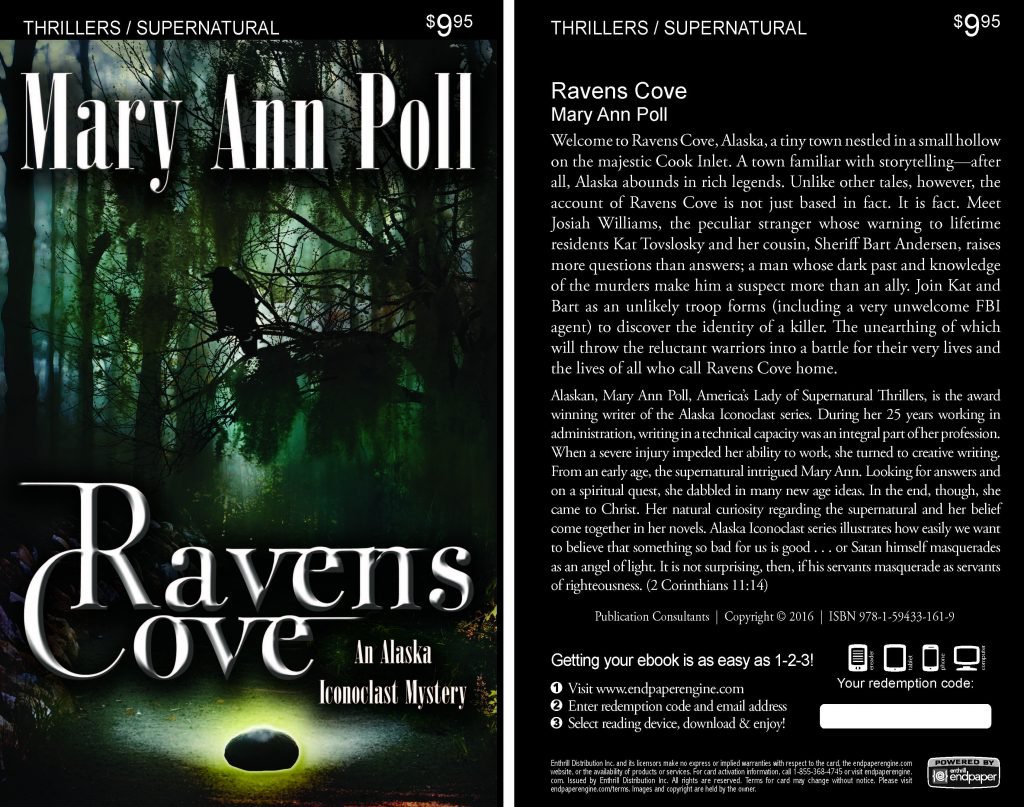

 Benjamin Franklin Award
 Jim Misko Book Signing at Barnes and Noble
 Cortex is for serious authors and will probably not be of interest to hobbyists. We recorded our Cortex training and information meeting. If you’re a serious author, and did not attend the meeting, and would like to review the training information, kindly let us know. Authors are required to have a Facebook author page to use Cortex.
 Correction:
 We take the quote by Marcella Smith, Small Press Business Manager, Barnes & Noble seriously: “The author is essential to the success of the book, giving energy behind the book to make it something that a customer will come in and ask for. That is what makes the difference in a book that sells, that develops legs, and has a life of its own. Otherwise the book goes on the shelf and stays there for three months. Then it gets returned.”
 This is Publication Consultants’ motivation for constantly striving to assist authors sell and market their books. ACM is Publication Consultants’ plan to accomplish this so that our authors’ books have a reasonable opportunity for success. We know the difference between motion and direction. ACM is direction! ACM is the process for authors who are serious about bringing their books to market. ACM is a boon for serious authors, but a burden for hobbyist. We don’t recommend ACM for hobbyists.

 We’re the only publisher we know of that provides authors with book signing opportunities. Book signing are appropriate for hobbyist and essential for serious authors. To schedule a book signing kindly go to our website, <
 An Author Page on Amazon Author Central is a serious author ACM requirement and desirable for the hobbyist. Author Central is a free resource designed to help authors become more active participants in the promotion of their books. In Author Central you can manage an Author Page, update information about your books, and view Customer Reviews and sales information for your bibliography. If you don’t already have an Author Page on
  We hear authors complain about all the personal stuff on Facebook. Most of these complaints are because the author doesn’t understand the difference difference between a Facebook profile and a Facebook page. Simply put, a profile is for personal things for friends and family; a page is for business. If your book is just a hobby, then it’s fine to have only a Facebook profile and make your posts for friends and family; however, if you’re serious about your writing, and it’s a business with you, or you want it to be business, then you need a Facebook page as an author. It’s simple to tell if it’s a page or a profile. A profile shows how many friends and a page shows how many likes. Here’s a link <> to a straight forward description on how to set up your author Facebook page.
 Active Social Media Participation


 Mosquito Books has a new location in the Anchorage international airport and is available for signings with 21 days notice. Jim Misko had a signing there yesterday. His signing report included these words, “Had the best day ever at the airport . . ..”


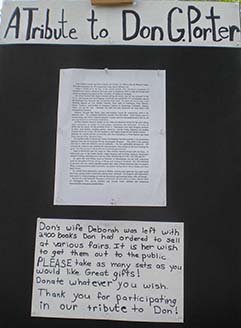
 The Lyin Kings: The Wannabe World Leaders
 Time and Tide


 ReadAlaska 2014
 Readerlink and Book Signings
 2014 Independent Publisher Book Awards Results
 Bonnye Matthews Radio Interview
 Rick Mystrom Radio Interview
 When he published those overseas blogs as the book The Innocents Abroad, it would become a hit. But you couldn’t find it in bookstores.
 More NetGalley
 Mary Ann Poll


 Bumppo
 Computer Spell Checkers
 Seven Things I Learned From a Foreign Email
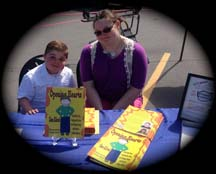 2014 Spirit of Youth Awards
 Book Signings


 Blog Talk Radio
 Publication Consultants Blog
 Book Signings


 Don and Lanna Langdok
 Ron Walden
 Book Signings Are Fun
 Release Party Video
 Erin’s book,
  Heather’s book,
  New Books