


Hail and Farewell
 Last Thursday, the Swedish Academy announced the Nobel Prize in Literature for 2026.
The laureate is Anne Carson — Canadian poet, classicist, translator. The committee called her work bold and inventive, said she had created new forms for contemporary literature in playful dialogue with the classical tradition. She was in Iceland when they reached her. She said the conversation was rather halting.
Carson’s most celebrated work of grief is Nox (Knopf, 2010) — not a book in the ordinary sense, but a facsimile of a handmade accordion book: pages folding out, photographs, fragments of letters, her own handwritten notes. At its center is her translation of Catullus, Poem 101, a Latin elegy written by the Roman poet for his brother who had died far from home. Carson’s own brother, Michael, died in 2000. She had not known him well. He had been absent from her life for years before his death. Nox is what she made from the gap — from the years she did not know him and the years he was gone.
Nox is the Latin word for night. She worked on it for years before it was published. When the Nobel was announced, the book sold out within hours.
Gaius Valerius Catullus wrote Poem 101 around 54 BCE.
His brother had died in the Troad — the region of Troy — far from home. Catullus traveled there. He stood at the grave. He performed the ritual. He said the words. The poem ends: ave atque vale. Hail and farewell. An address to a brother who cannot answer. A gesture made anyway.
Carson spent years working over her translation of the poem, turning every word, looking for what the Latin was doing underneath the surface. She wrote in Nox: “A translation always makes its way from one kind of darkness to another.” Catullus had been dead for two thousand years. The poem had crossed those years to find Carson when she needed it. She answered back with a book.
The Power of Authors points here. Carson did not make Nox to publish an elegy. She made it because her brother was gone and language was the only material left to her. The book is one of the most extraordinary things in recent literature — not because it was calculated to be, but because the need behind it was absolute.
Write toward the people you are losing or have lost. Write the letter you cannot send. Do the translation no one asked for. Make the book no publisher requested. The writing is not for an audience. The writing is what you do with your hands when language is the only way to reach someone.
Catullus’s brother has been dead for two thousand years. The poem is still being read. It was waiting for Carson when she needed it.
Write what you cannot leave unsaid. Someone is waiting for it — across town, or across twenty centuries.
Discover why purpose is the foundation of every sentence worth writing in The Power of Authors by Evan and Lois Swensen.
The Power of Authors is available from Amazon or your favorite bookseller: https://www.amazon.com/dp/1594338698. If you’d like an autographed copy, you can order it here: http://bit.ly/4pgmzjM.

 When Josh Verhagen created Eddie the Ermine, he understood something most authors miss. The illustrations in his book do not decorate the story. They teach. Every page invites interaction. Hidden animals draw young readers deeper into the images. The visual experience is inseparable from the message.
 Three years after his wife’s death, Wolo receives a letter.
 You will hear this advice: create a Facebook Page for your book.
 She was a conservatory student — the kind of student who doesn’t just play but feels music as something larger than technique. Then a relationship ended badly. A choice was made young. She became Livia Cable instead, living quietly in farm country, having traded the conservatory for stability and the passion for something more manageable.
 For every post asking readers to buy the book, share three giving them a reason to stay.
 When I first met Weston Fields, he looked every bit the Kodiak fisherman — rubber boots, suspenders, wool shirt. He was there to support his mother, who had written a book about ranching history on the island. She spoke first. He said almost nothing. When he finally did, it was to tell me — gently — he had already edited her manuscript.
 It is the summer of 1951. London is still pockmarked with bomb sites. Food is still rationed. Men who survived the Burma Railway, the North Atlantic convoys, the firebombing of cities have come home to a country worn to nothing by six years of war and five more of austerity. The war ended in 1945. The damage did not.
 Robin Barefield lives in the wilderness on Kodiak Island, where she and her husband own a remote lodge. She wrote her first novel, Murder Over Kodiak, powered by a generator, miles from the nearest road. No MFA. No publishing connections. No high-speed internet.
 A reader once walked into a bookstore and said, “I’m looking for a mystery set in Alaska.” The bookseller reached for a shelf and handed her a book.
 The ceremony is the same every year. The names are the same. The readers change — grown children now where small children once stood, grandchildren where children once stood. The memorial pools fill the footprints of the towers. The water falls continuously.
 Open a browser you do not normally use. Type your name. Hit search.
 He had grown up in Bujumbura, the capital — the son of a French father and a Rwandan Tutsi mother. In 1994, the genocide in neighboring Rwanda killed between 500,000 and 800,000 people in one hundred days. Civil war followed in Burundi. His family left. He grew up in France.
 The morning after. The folding tables are back in the garage. The leftover food is in the refrigerator. The unsold books are stacked on the dining room table. The banner is rolled up in the corner.
 Lee came to the United States from Seoul at age three, with his mother and sister, to join his father, a psychiatrist who had immigrated earlier. He grew up in Westchester County, outside New York City. As a child, he often translated for his Korean-speaking mother. He stood between two languages for her, carrying her words into English and the world’s words back to her.
 Monday morning. A bookstore manager sits down with forty-seven unread messages. She has an hour before the store opens. She is deciding which emails deserve her attention and which ones can wait.
 The novelist Ella Camposanto has arrived in Sicily with her twelve-year-old daughter, Manuela. They are staying near the ruins where the narrator’s grandmother once worked on an archaeological dig. The summer is full of volcanic rumbles and sudden storms. The narrator’s mother is beginning to forget.
 When I was publishing Alaska Outdoors magazine, the head of the journalism department at the University of Alaska sent me a submission. It was so poorly written, I took it for a joke. I answered it as a joke, only to learn the author was serious. He simply had such an inflated self-image; his writing read like a spoof. It was no spoof.
 At 8:15 on the morning of August 6, 1945, Kiyoshi Tanimoto was on the outskirts of Hiroshima, unloading a handcart at a house in the suburb of Koi. He was two miles from the city center. He had slept poorly — the overnight air-raid warnings had kept him up — and he had risen early and set out with the cart.
 Two books publish on the same Tuesday.
 Among the nineteen longlisted novelists this year are writers who have been writing for a long time before this first novel existed.
 You check your Amazon page for the first time after your launch team has done its work. The reviews are there. Three in the first week. Your heart lifts. Then you notice the label beneath one of them.
 Author Campaign Method (ACM) for Authorpreneurs
 This is Publication Consultants’ motivation for constantly striving to assist authors sell and market their books. Author Campaign Method (ACM) of sales and marketing is Publication Consultants’ plan to accomplish this so that our authors’ books have a reasonable opportunity for success. We know the difference between motion and direction. ACM is direction! ACM is the process for authorpreneurs who are serious about bringing their books to market. ACM is a boon for them.
 Release Party
 Web Presence
 Book Signings
 Amazon Author Page
 Facebook Profile and Facebook Page
 Active Social Media Participation
 Ebook Cards
 The Great Alaska Book Fair: October 8, 2016


 Costco Book Signings
 eBook Cards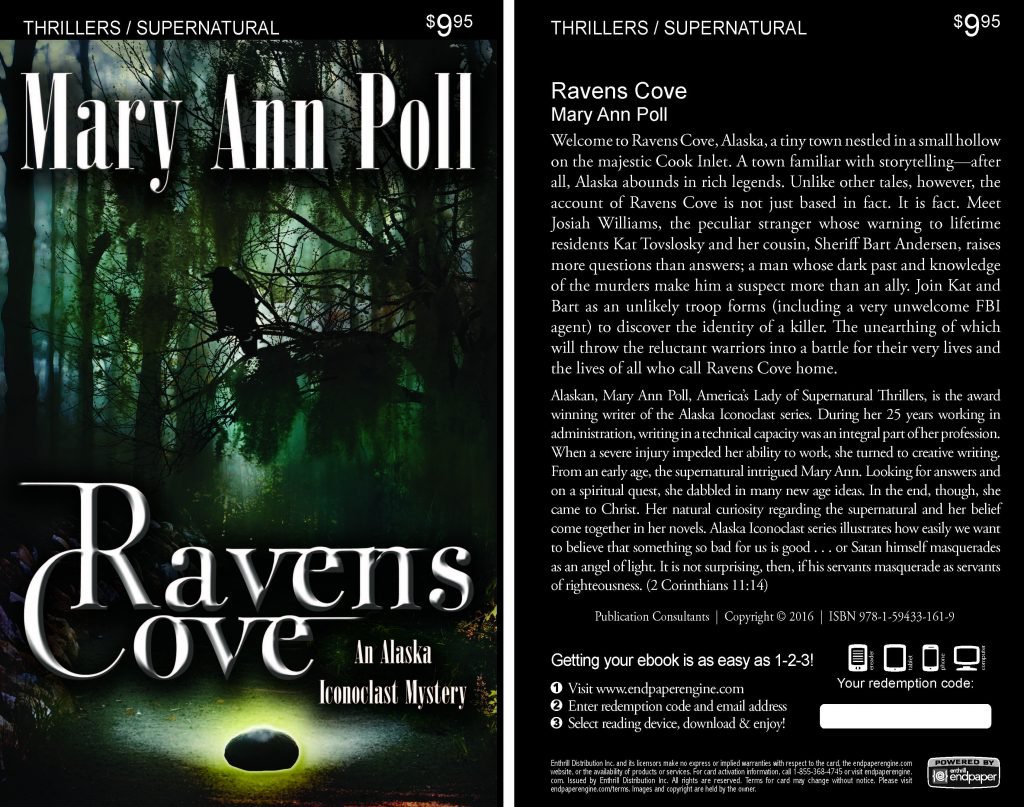

 Benjamin Franklin Award
 Jim Misko Book Signing at Barnes and Noble
 Cortex is for serious authors and will probably not be of interest to hobbyists. We recorded our Cortex training and information meeting. If you’re a serious author, and did not attend the meeting, and would like to review the training information, kindly let us know. Authors are required to have a Facebook author page to use Cortex.
 Correction:
 We take the quote by Marcella Smith, Small Press Business Manager, Barnes & Noble seriously: “The author is essential to the success of the book, giving energy behind the book to make it something that a customer will come in and ask for. That is what makes the difference in a book that sells, that develops legs, and has a life of its own. Otherwise the book goes on the shelf and stays there for three months. Then it gets returned.”
 This is Publication Consultants’ motivation for constantly striving to assist authors sell and market their books. ACM is Publication Consultants’ plan to accomplish this so that our authors’ books have a reasonable opportunity for success. We know the difference between motion and direction. ACM is direction! ACM is the process for authors who are serious about bringing their books to market. ACM is a boon for serious authors, but a burden for hobbyist. We don’t recommend ACM for hobbyists.

 We’re the only publisher we know of that provides authors with book signing opportunities. Book signing are appropriate for hobbyist and essential for serious authors. To schedule a book signing kindly go to our website, <
 An Author Page on Amazon Author Central is a serious author ACM requirement and desirable for the hobbyist. Author Central is a free resource designed to help authors become more active participants in the promotion of their books. In Author Central you can manage an Author Page, update information about your books, and view Customer Reviews and sales information for your bibliography. If you don’t already have an Author Page on
  We hear authors complain about all the personal stuff on Facebook. Most of these complaints are because the author doesn’t understand the difference difference between a Facebook profile and a Facebook page. Simply put, a profile is for personal things for friends and family; a page is for business. If your book is just a hobby, then it’s fine to have only a Facebook profile and make your posts for friends and family; however, if you’re serious about your writing, and it’s a business with you, or you want it to be business, then you need a Facebook page as an author. It’s simple to tell if it’s a page or a profile. A profile shows how many friends and a page shows how many likes. Here’s a link <> to a straight forward description on how to set up your author Facebook page.
 Active Social Media Participation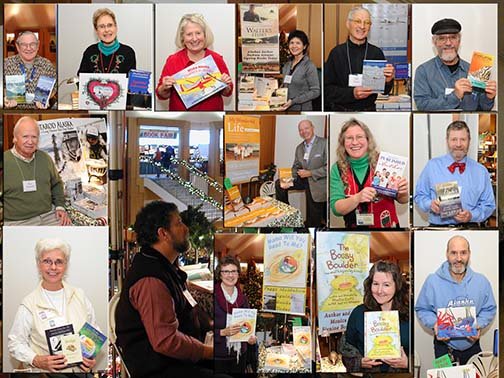


 Mosquito Books has a new location in the Anchorage international airport and is available for signings with 21 days notice. Jim Misko had a signing there yesterday. His signing report included these words, “Had the best day ever at the airport . . ..”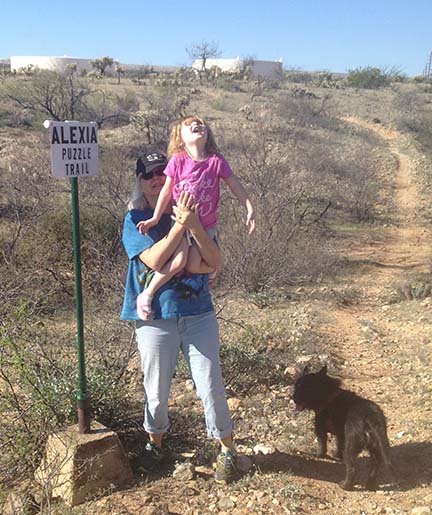


 The Lyin Kings: The Wannabe World Leaders
 Time and Tide


 ReadAlaska 2014
 Readerlink and Book Signings
 2014 Independent Publisher Book Awards Results
 Bonnye Matthews Radio Interview
 Rick Mystrom Radio Interview
 When he published those overseas blogs as the book The Innocents Abroad, it would become a hit. But you couldn’t find it in bookstores.
 More NetGalley
 Mary Ann Poll


 Bumppo
 Computer Spell Checkers
 Seven Things I Learned From a Foreign Email
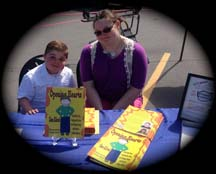 2014 Spirit of Youth Awards
 Book Signings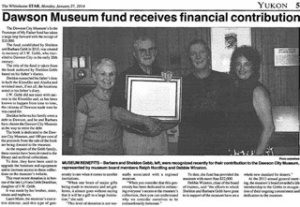

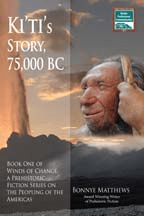
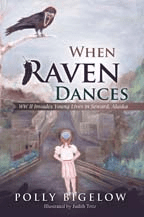 Blog Talk Radio
 Publication Consultants Blog
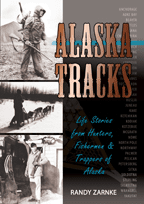 Book Signings

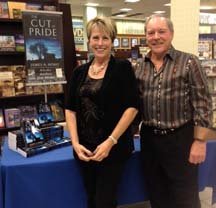

 Don and Lanna Langdok
 Ron Walden
 Book Signings Are Fun
 Release Party Video
 Erin’s book,
  Heather’s book,
  New Books
The Column Nobody Finished
Cedar Valley News — February 24, 2026
The Column Nobody Finished
By: George Khan
From the fictional town of Cedar Valley, where characters from Quiet Echo continue to respond to real-world events.
Read those two sentences again. The writing meant to connect a newspaper to its community was driving the community away.
The editors wrote it down in a memo: “Readers don’t want us to tell them how to think. They don’t believe we have the expertise to tell anyone what to think on most issues. They perceive us as having a biased agenda.”
The Des Moines Register cut its opinion pages to two days a week. Other Gannett papers dropped syndicated columns, eliminated editorial cartoons, and stopped endorsing candidates in federal races. An entire chain of American newspapers looked at the opinion page and decided it was broken beyond repair.
I fix broken things for a living. When a machine stops working, I do not throw it away. I open it up and find out why.
The opinion page did not break because people stopped caring about opinions. People care more than ever. Social media proved it. Everybody has something to say. The opinion page broke because the people writing it forgot to ask three questions before they started.
Why am I writing this? For whom? To what end?
I learned those questions from a book called The Power of Authors by Evan Swensen and Lois Swensen. The book is not about opinion columns. It is about writing with purpose — any writing, for any audience, in any form. But the principle fits an opinion page the way a carburetor fits an engine. Without it, nothing runs.
Here is what happens when a columnist skips those three questions. The piece opens with outrage. It assumes the reader already agrees. It builds no argument because it believes the conclusion is obvious. It acknowledges no other side because the other side is the enemy. It offers no solution because the point was never to solve anything. The point was to perform.
The reader finishes — if the reader finishes — feeling either validated or insulted. Neither one changed. Nobody moved. The writer spent eight hundred words and left the world exactly where it was.
Now watch what changes when the writer stops and answers those three questions first.
Why am I writing this? Not because I am angry. Because a nine-year-old is scrolling Instagram at midnight, and nobody at the company asked why. Because a young man nobody had heard of showed up at a gate with a shotgun and is now dead on the ground. The why has to be specific. One sentence. If you cannot say it in one sentence, you are not ready.
For whom? Not for everyone. For the mother checking her daughter’s phone at the kitchen table. For the neighbor who watches the headlines and feels something is wrong but cannot name it. Name one reader. Write to the person, not the crowd.
To what end? Not agreement. If the answer is “agree with me,” start over. The end is a question the reader carries into tomorrow. A conversation the reader starts instead of avoiding.
Answer those three questions honestly, and the piece changes shape before the first sentence is written. Outrage becomes evidence. Assumptions become arguments. The enemy becomes a fellow citizen who sees it differently and deserves to know why. The performance becomes a conversation.
The Des Moines Register’s opinion editor said his readers were tired of content aimed at “stoking divisions rather than offering solutions.” He is right. But the solution is not fewer opinion pages. The solution is better purpose behind the ones we publish.
Teresa said it yesterday. The hand holding the tool decides what gets built. A column is a tool. With purpose, it builds understanding. Without purpose, it just makes noise.
Lars Olson told me he can tell in thirty seconds whether a customer came in to fix something or to complain. The ones who came to fix walk straight to the aisle. The ones who came to complain stand at the counter and talk. Both are welcome. Only one leaves with the problem solved.
A good column walks straight to the aisle.
I am not a writer by trade. I fix engines. But I read the opinion page every morning with my coffee, and I can tell you the moment a columnist loses me. It is not when I disagree. I can read someone I disagree with all day if the argument is honest. I lose interest when the writer has no purpose beyond being right. When the column could have been written by anyone, about anything, on any day.
Cedar Valley’s opinion page works differently. Not because we are smarter. Because we ask three questions before we write. Every time. No exceptions.
Why am I writing this? For whom? To what end?
Try it. The next email you send. The next post you write. The next letter to the editor you draft at the kitchen table. Three questions. If you cannot answer all three in one sentence each, you are not ready to write.
And if you can, you will write something worth finishing.
This editorial is part of the fictional Cedar Valley News series. While the people and town are fictional, the national events they reflect on are real.
Want to know the full story behind Cedar Valley? Teresa, Caleb, Dan, and the community you’ve come to know in these editorials first came together in Quiet Echo. Discover how a small town found its way from fear to fellowship—one quiet act of courage at a time. Available on Amazon: https://bit.ly/3ME4nSs
Recent Posts
Eyes from Broken Hill
Eyes from Broken Hill
Hail and Farewell
The Girl in the Card
Izzy’s Corner
Instagram for the Author
The Oatmeal Isn’t Hot
The Cook Who Needed the Meal
The Rust Was on the Knowing
He Had Somewhere to Be
What Grief Writes
The Empty Desk
A Body Is Not a Search Query
Facebook for the Author
The Bet in Your Pocket
No Service, By Request
The Chair They Kept
The Man They Wrote Off
What You Walk Away From
What Spreads Fastest