

Cedar Valley News — March 4, 2026
Who Is Going to Fix It?
By: Lars Olson
From the fictional town of Cedar Valley, where characters from Quiet Echo continue to respond to real-world events.
 A woman came into the store last Tuesday looking for a plumber. Not a part. Not advice. A plumber. She had called four in the county. Two did not answer. One was booked three weeks out. The fourth had retired.
I gave her a name. She thanked me like I had done her a personal favor. I had not. I had given her the only plumber I knew still taking new work within thirty miles.
This is happening in every trade. Plumbing. Electrical. HVAC. Welding. Carpentry. The people who build, fix, and maintain the physical world are disappearing, and we spent thirty years helping them leave.
We told a generation of kids one story. Go to college. Get a degree. Sit at a desk. We said it at kitchen tables, in guidance offices, at graduation speeches. We said it so often and so firmly we forgot it was a choice, not a commandment. And while we were saying it, the electricians and pipe fitters and framers were getting older, and nobody was walking into the shop behind them.
The numbers are plain. More than five hundred and fifty thousand construction jobs sit unfilled across the country right now. Ninety-four percent of contractors report difficulty hiring at every skill level. The Bureau of Labor Statistics estimates the annual shortage will grow to close to half a million workers over the next decade. Nearly a third of union electricians are at or near retirement age. The people leaving know things the people coming in have not yet learned — and in some cases, there is nobody coming in at all.
Here is the part nobody expected. Forty-seven percent of skilled tradespeople now earn more than the median college graduate. Read it again. Nearly half the welders, HVAC technicians, heavy equipment operators, and electricians in this country make more money than the average person holding a four-year degree. A licensed elevator mechanic can clear a hundred and forty thousand dollars. A construction manager averages over a hundred thousand. A journeyman plumber or electrician earns north of sixty thousand within a few years of finishing training — and starts working years before the college graduate sends a first resume.
Meanwhile the average college student carries tens of thousands in debt before earning a dollar. The trade school graduate carries little or none.
I am not against college. My daughter went. She is doing fine. But we built a culture where a seventeen-year-old who wanted to wire houses felt like a second choice. We made the boy who was good with his hands feel like he had failed before he started. We sent the message — not in words, but in weight — the desk was better than the bench.
The country is starting to correct. Trade school enrollment jumped sixteen percent between 2022 and 2023. Apprenticeship enrollment has doubled since 2013. The federal government just announced a hundred and forty-five million dollars in new grants for registered apprenticeships in construction, manufacturing, health care, and defense. Forty-seven states passed laws last year expanding career and technical education. The direction is right.
But the hole is deep. You cannot train an electrician in a semester. A plumbing apprenticeship takes four to five years. The gap between the people retiring and the people arriving is measured in decades of accumulated knowledge walking out the door.
To be sure, not every kid belongs in a trade. Some belong in a classroom. Some belong in a lab. The answer was never “everyone should go to trade school” any more than it was “everyone should go to college.” The answer was always the same — figure out what the young person in front of you is built for and help them get there. We just stopped offering half the options.
I sell hardware. I sell screws and pipe fittings and saw blades and wire nuts. Every one of those items is useless without a person who knows how to use it. The shelf does not fix the furnace. The box of fittings does not stop the leak. A human being with trained hands and a steady head does the work. And we are running out of those human beings.
If you have a son or daughter, or a grandchild, staring at the fall and wondering what comes next, do not hand them a single answer. Hand them the full list. Show them the earnings. Show them the demand. Let them hold a wrench and a textbook and decide for themselves which one fits.
Mildred says I talk about this too much. She is probably right. But the next time your furnace goes out in January and nobody answers the phone, you will understand why.
This editorial is part of the fictional Cedar Valley News series, written by Evan Swensen, Publisher, Publication Consultants, and Claude Marshall, AI Developmental Editor. While the people and town are fictional, the national events they reflect on are real.
Want to know the full story behind Cedar Valley? Teresa, Caleb, Dan, and the community you’ve come to know in these editorials first came together in Quiet Echo. Discover how a small town found its way from fear to fellowship — one quiet act of courage at a time. Available on Amazon: https://bit.ly/3ME4nSs
Why do words matter? Because they change lives — when someone reads them. Discover why purpose is the foundation of every sentence worth writing in The Power of Authors by Evan and Lois Swensen. Available on Amazon.



 Open a browser you do not normally use. Type your name. Hit search.
 He had grown up in Bujumbura, the capital — the son of a French father and a Rwandan Tutsi mother. In 1994, the genocide in neighboring Rwanda killed between 500,000 and 800,000 people in one hundred days. Civil war followed in Burundi. His family left. He grew up in France.
 The morning after. The folding tables are back in the garage. The leftover food is in the refrigerator. The unsold books are stacked on the dining room table. The banner is rolled up in the corner.
 Lee came to the United States from Seoul at age three, with his mother and sister, to join his father, a psychiatrist who had immigrated earlier. He grew up in Westchester County, outside New York City. As a child, he often translated for his Korean-speaking mother. He stood between two languages for her, carrying her words into English and the world’s words back to her.
 Monday morning. A bookstore manager sits down with forty-seven unread messages. She has an hour before the store opens. She is deciding which emails deserve her attention and which ones can wait.
 The novelist Ella Camposanto has arrived in Sicily with her twelve-year-old daughter, Manuela. They are staying near the ruins where the narrator’s grandmother once worked on an archaeological dig. The summer is full of volcanic rumbles and sudden storms. The narrator’s mother is beginning to forget.
 When I was publishing Alaska Outdoors magazine, the head of the journalism department at the University of Alaska sent me a submission. It was so poorly written, I took it for a joke. I answered it as a joke, only to learn the author was serious. He simply had such an inflated self-image; his writing read like a spoof. It was no spoof.
 At 8:15 on the morning of August 6, 1945, Kiyoshi Tanimoto was on the outskirts of Hiroshima, unloading a handcart at a house in the suburb of Koi. He was two miles from the city center. He had slept poorly — the overnight air-raid warnings had kept him up — and he had risen early and set out with the cart.
 Two books publish on the same Tuesday.
 Among the nineteen longlisted novelists this year are writers who have been writing for a long time before this first novel existed.
 You check your Amazon page for the first time after your launch team has done its work. The reviews are there. Three in the first week. Your heart lifts. Then you notice the label beneath one of them.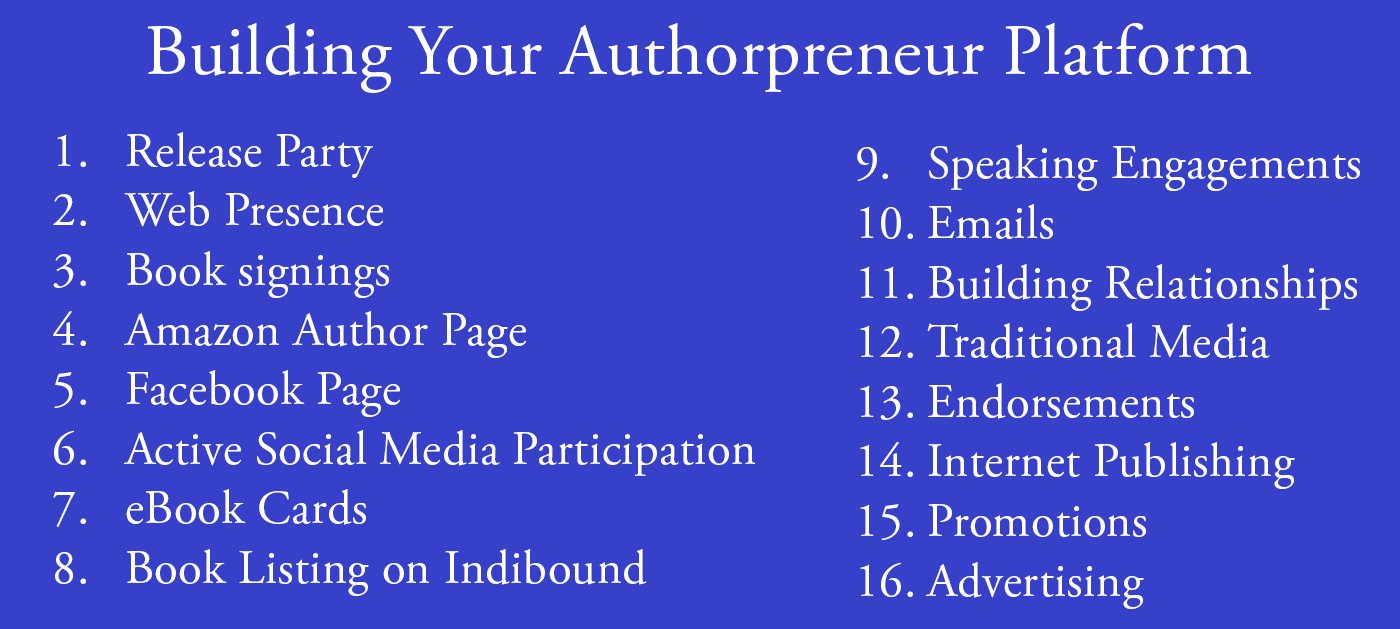
 Author Campaign Method (ACM) for Authorpreneurs
 This is Publication Consultants’ motivation for constantly striving to assist authors sell and market their books. Author Campaign Method (ACM) of sales and marketing is Publication Consultants’ plan to accomplish this so that our authors’ books have a reasonable opportunity for success. We know the difference between motion and direction. ACM is direction! ACM is the process for authorpreneurs who are serious about bringing their books to market. ACM is a boon for them.
 Release Party
 Web Presence
 Book Signings
 Amazon Author Page
 Facebook Profile and Facebook Page
 Active Social Media Participation
 Ebook Cards
 The Great Alaska Book Fair: October 8, 2016


 Costco Book Signings
 eBook Cards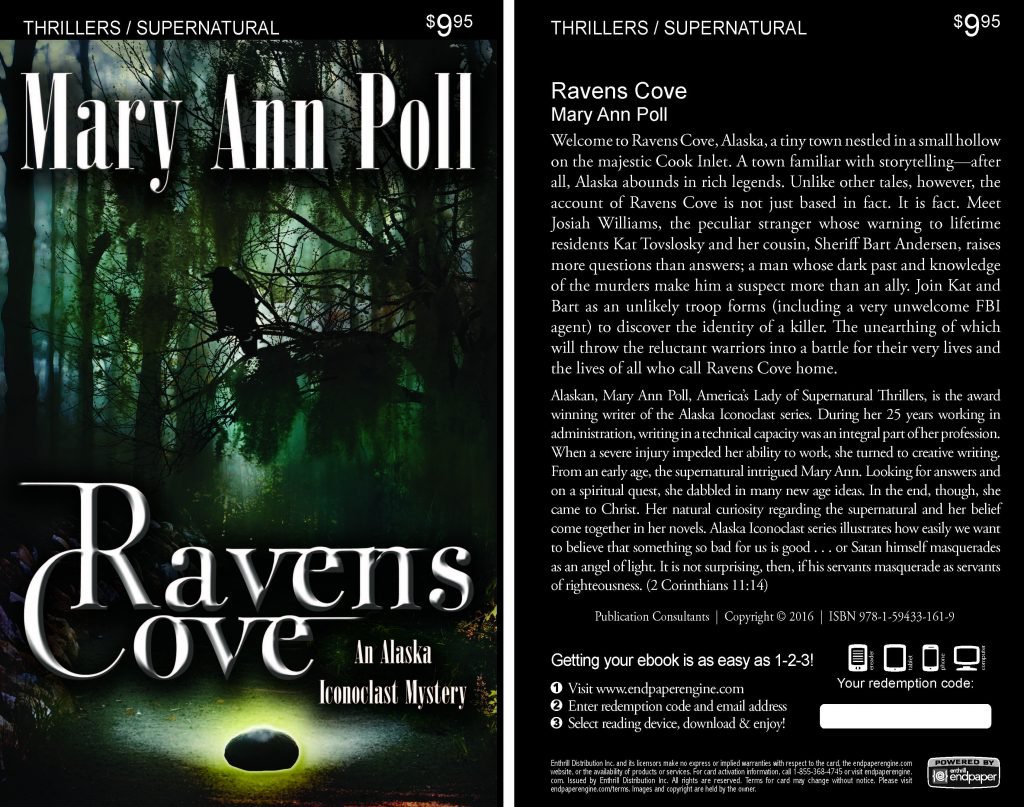

 Benjamin Franklin Award
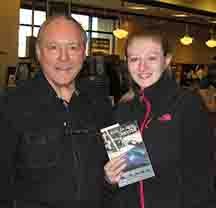 Jim Misko Book Signing at Barnes and Noble
 Cortex is for serious authors and will probably not be of interest to hobbyists. We recorded our Cortex training and information meeting. If you’re a serious author, and did not attend the meeting, and would like to review the training information, kindly let us know. Authors are required to have a Facebook author page to use Cortex.
 Correction:
 We take the quote by Marcella Smith, Small Press Business Manager, Barnes & Noble seriously: “The author is essential to the success of the book, giving energy behind the book to make it something that a customer will come in and ask for. That is what makes the difference in a book that sells, that develops legs, and has a life of its own. Otherwise the book goes on the shelf and stays there for three months. Then it gets returned.”
 This is Publication Consultants’ motivation for constantly striving to assist authors sell and market their books. ACM is Publication Consultants’ plan to accomplish this so that our authors’ books have a reasonable opportunity for success. We know the difference between motion and direction. ACM is direction! ACM is the process for authors who are serious about bringing their books to market. ACM is a boon for serious authors, but a burden for hobbyist. We don’t recommend ACM for hobbyists.

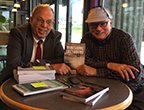
 We’re the only publisher we know of that provides authors with book signing opportunities. Book signing are appropriate for hobbyist and essential for serious authors. To schedule a book signing kindly go to our website, <
 An Author Page on Amazon Author Central is a serious author ACM requirement and desirable for the hobbyist. Author Central is a free resource designed to help authors become more active participants in the promotion of their books. In Author Central you can manage an Author Page, update information about your books, and view Customer Reviews and sales information for your bibliography. If you don’t already have an Author Page on
  We hear authors complain about all the personal stuff on Facebook. Most of these complaints are because the author doesn’t understand the difference difference between a Facebook profile and a Facebook page. Simply put, a profile is for personal things for friends and family; a page is for business. If your book is just a hobby, then it’s fine to have only a Facebook profile and make your posts for friends and family; however, if you’re serious about your writing, and it’s a business with you, or you want it to be business, then you need a Facebook page as an author. It’s simple to tell if it’s a page or a profile. A profile shows how many friends and a page shows how many likes. Here’s a link <> to a straight forward description on how to set up your author Facebook page.
 Active Social Media Participation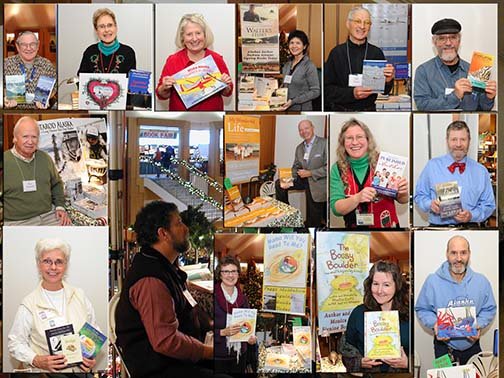


 Mosquito Books has a new location in the Anchorage international airport and is available for signings with 21 days notice. Jim Misko had a signing there yesterday. His signing report included these words, “Had the best day ever at the airport . . ..”


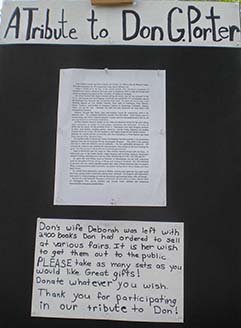
 The Lyin Kings: The Wannabe World Leaders
 Time and Tide


 ReadAlaska 2014
 Readerlink and Book Signings
 2014 Independent Publisher Book Awards Results
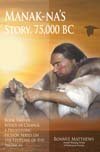
 Bonnye Matthews Radio Interview
 Rick Mystrom Radio Interview
 When he published those overseas blogs as the book The Innocents Abroad, it would become a hit. But you couldn’t find it in bookstores.
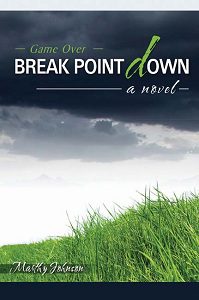 More NetGalley
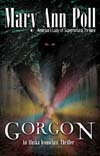 Mary Ann Poll


 Bumppo
 Computer Spell Checkers
 Seven Things I Learned From a Foreign Email
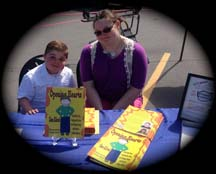 2014 Spirit of Youth Awards
 Book Signings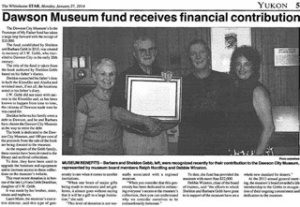

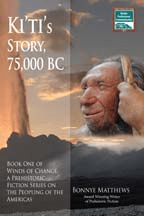
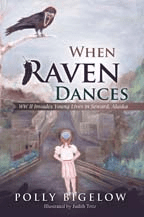 Blog Talk Radio
 Publication Consultants Blog
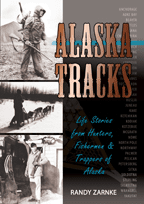 Book Signings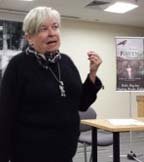

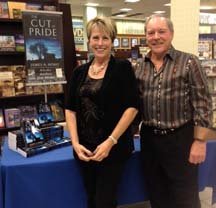

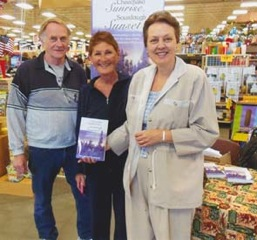 Don and Lanna Langdok
 Ron Walden
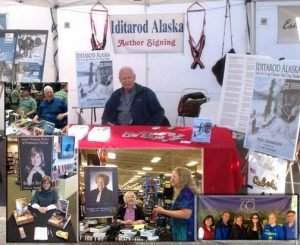 Book Signings Are Fun
 Release Party Video
 Erin’s book,
  Heather’s book,
  New Books